

You climb into bed tired. Your eyes are heavy, the lights are off, and yet your chest feels busy, almost as if your body didn't get the memo. If that sounds familiar, the problem may not be your mattress or your bedtime. It may be your heart rate.
Heart rate matters for falling asleep because a slower, steadier heartbeat is one of the clearest signs that your nervous system has shifted from "alert" to "rest." When your pulse stays high at bedtime, your body is still running in daytime mode, and sleep tends to arrive late or stay shallow. This guide explains what happens to your heart rate as you drift off, why it sometimes refuses to settle, and what you can do about it tonight. It also covers where a smart sleep mask, like the ones in the Hypnuse range, fits into a calmer evening.
This article is general information, not medical advice. If you have concerns about your heart or your sleep, speak with a qualified healthcare professional.

A calm bedroom and a repeatable wind-down are the foundation of a lower bedtime heart rate.
What Your Heart Rate Actually Tells You About Sleep Readiness
Heart rate is the number of times your heart beats per minute, and at bedtime it works as a quick read on how relaxed or stirred up your body is.
Think of your nervous system as having two modes. The "go" mode (sympathetic) speeds your heart up, tightens your muscles and sharpens your attention. The "rest" mode (parasympathetic) slows the heart, loosens tension and lets you drift. You can't fall asleep well while "go" is in charge. That's why you can feel physically exhausted yet wide awake: tiredness is about sleep pressure, while a racing pulse is about arousal. They're two different dials.
Here's a simple way to picture it. Imagine pulling into a parking spot after a long motorway drive. You've stopped moving, but the engine is still hot and ticking. Your body after a stressful day is the same. You've stopped, but you haven't cooled down. A lower heart rate is the sign the engine has finally gone quiet.
Three points are worth remembering:
- Your pulse is feedback, not a verdict. It reflects stress, caffeine, movement, food and mood, all at once.
- Trends beat single readings. One high night means very little. A pattern over weeks tells you more.
- It's something you can influence. Evening habits, breathing and environment all nudge it in a useful direction.
How Your Heart Rate Changes as You Fall Asleep
As you fall asleep, your heart rate gradually slows, reaching its lowest point during deep sleep, then rises somewhat during REM sleep. Sleep health organizations such as the Sleep Foundation describe the same overall pattern: heart rate is generally lower asleep than awake, with REM sleep as the possible exception.
| Stage | What your heart rate tends to do | Why it matters |
|---|---|---|
| Awake, winding down | Starts to ease if you are relaxed, stays elevated if you are tense | This is the stage you can influence most |
| Light sleep | Slows toward your resting rate | The "on-ramp" into sleep |
| Deep sleep | Reaches its lowest levels of the night | Associated with physical recovery |
| REM sleep | Can rise closer to waking levels | Normal, linked to vivid dreaming |
The takeaway is that falling asleep is a downhill slope. The sooner your heart rate starts descending, the sooner you reach the slope's gentler stages. If it stays high at the top, you spend longer standing at the edge, wondering why nothing is happening.
If you like seeing this kind of data, Hypnuse has a helpful explainer on sleep stage tracking and why it matters.
Why a Racing Heart Makes It Hard to Fall Asleep
A high heart rate at bedtime usually signals that your body is still in "go" mode, which keeps your brain alert and delays sleep onset. It's a loop: stress raises your pulse, a raised pulse feels like something is wrong, and that feeling creates more stress.
Picture a common evening. You answer one last email at 10:30, scroll for a few minutes, then switch the lights off. Your body registers none of that as "the day is over." Your heart is still tuned to the inbox. You lie there, notice your pulse, and start monitoring it, which keeps your attention fixed on the very thing you're trying to forget.
Common reasons your pulse stays up at bedtime include:
- Stress and mental carry-over. Unfinished work and worries keep your system switched on.
- Caffeine late in the day. It can linger in your system well into the evening.
- Alcohol. It may make you feel drowsy, but it can disrupt the quality of your sleep later in the night.
- Late or intense exercise. Exercise is excellent for sleep overall, but a hard session right before bed can leave you buzzing.
- A heavy late meal. Your body is busy digesting when it should be settling.
- A warm, bright or noisy room. Your environment can quietly keep you alert.
Notice how many of these are habits, not conditions. That's good news, because habits can be changed. For a wider view of the full-day picture, see Hypnuse's piece on what sleep hygiene is and why most people get it wrong.
What Is a "Good" Heart Rate Before Bed?
For most healthy adults, a normal resting heart rate falls between roughly 60 and 100 beats per minute, and it tends to be lower in people who are physically fit and lower again during sleep. That's a general reference range, not a personal target.
The honest answer to "what should mine be?" is that it depends. Age, fitness, medications, stress, hydration and even the day of the week all play a part. A person who runs regularly may sit comfortably in the 50s. Someone dealing with a stressful week may see numbers a few beats higher than usual. Neither is automatically a problem.
| What you notice | What it often reflects | Sensible response |
|---|---|---|
| Pulse a few beats above your usual after a hard day | Stress, caffeine, late exercise or a late meal | Adjust your evening routine and watch the trend |
| Pulse steady and comfortable most nights | A well-settled evening routine | Keep doing what works |
| Pulse that stays elevated for weeks, or comes with chest discomfort, dizziness or breathlessness | Something that needs a professional opinion | Speak with a healthcare professional |
The aim isn't to hit a magic number. It's to understand what's normal for you and notice when that changes.
Habits That Help Your Heart Rate Settle Before Bed
The most reliable way to lower your heart rate before sleep is to combine a consistent routine, slow breathing and a calm environment, rather than relying on any single trick.

Quiet, dark and still: slow breathing works best when distractions are removed.
Slow, paced breathing is the simplest tool you have, because breathing is the one part of your autonomic system you can steer on purpose. Breathing out a little longer than you breathe in is a popular approach. It gives your attention a task, and most people find their body follows. If you want a structured version, Hypnuse's Sleep Tips page collects short, practical ideas.
Try building an evening around these steps:
- Set a repeatable start time. Your body loves a cue it can predict.
- Cut caffeine earlier than you think you need to. Many people are surprised by how long it hangs around.
- Finish hard exercise a few hours before bed. Gentle stretching or a short walk is fine.
- Dim the lights and park the screens. Bright light tells your brain it's still daytime.
- Do something that signals "done." A warm shower, a few pages of a book, or a short breathing session all work.
- Keep the room cool, dark and quiet. A comfortable environment lets your body stop guarding.
- Don't stare at your pulse. Checking numbers repeatedly in the dark tends to create alertness.
None of these is dramatic. Together, they give your body a clear message that the day is finished.
Where a Smart Sleep Mask Fits In
A smart sleep mask supports a lower heart rate indirectly: it removes light, adds gentle warmth, sound and breathing guidance, and, on sensor-equipped models, lets you see heart rate data in an app. It does not control your heart, and it is not a medical device. What it does well is make a calm wind-down easier to repeat.
Here's how the pieces map to the bedtime problem:
- Darkness removes the light leaks that keep your brain half-awake.
- Gentle warmth around the eyes is a familiar comfort cue for many people. Hypnuse's heated models offer adjustable levels, and starting low is the sensible approach.
- Guided breathing and sound give your attention a steady place to rest, so you aren't left counting your own breaths in the dark.
- Heart rate sensing on supported models shows how your night went, so you can compare routines over several weeks.
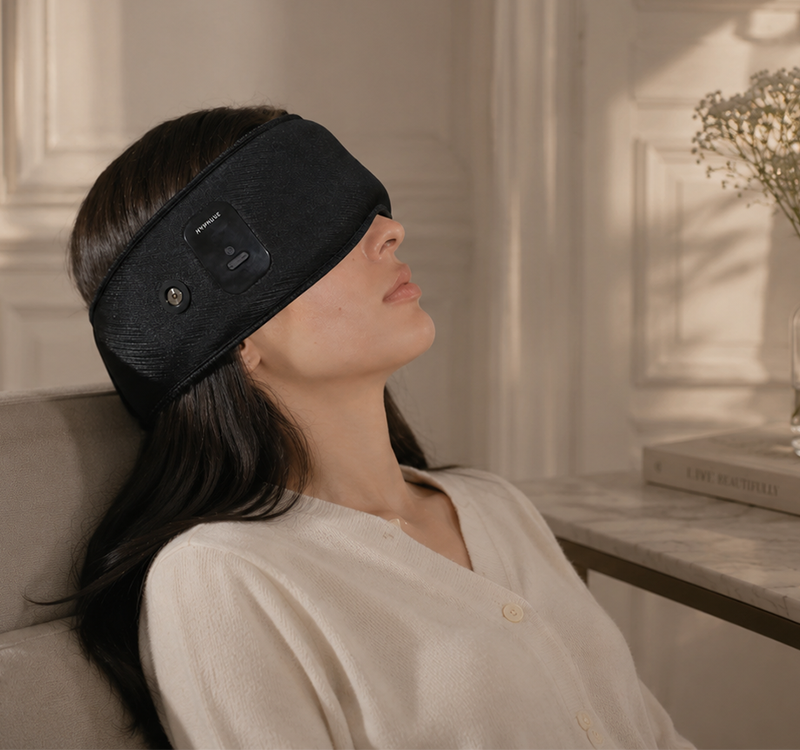
The sensor-equipped Hypnuse masks combine speakers, heat and heart rate, pulse oximeter and motion sensors in one wearable.
Hypnuse lists a heart rate sensor, a pulse oximeter and a motion sensor in its sensor-equipped models, which sync with the app. To see the full wind-down approach in one place, read the guide to the Hypnuse AI sleep mask and how to wind down faster at night, or the How It Works page for the technology behind it.
One honest caveat: consumer sensors give useful trends, not clinical measurements. Treat the numbers as a guide for your routine, not as a diagnosis.
Choosing the Right Mask for Your Bedtime Routine
The best mask is the one that matches your actual problem: light, tension, a busy mind, or a wish to see your sleep data. Prices below were listed on the Hypnuse site in October 2026 and may change, and features vary by model, so check each product page.
| Model | What it is | Price (USD) | Best for |
|---|---|---|---|
| Hypnuse Pro: Immerse Edition | Flagship AI sleep mask with sensors, heat and sound | $249 | Seeing heart rate data and the full wind-down experience |
| Hypnuse Rhythm | Intelligent heating eye mask | $199 | Warmth-led evening routines |
| Hypnuse Hush | Modular, 100% blackout mask | $35 | Darkness first, without electronics |
| Hypnuse Core | Non-electronic, portable travel mask | $15 | Flights, hotels and travel bags |
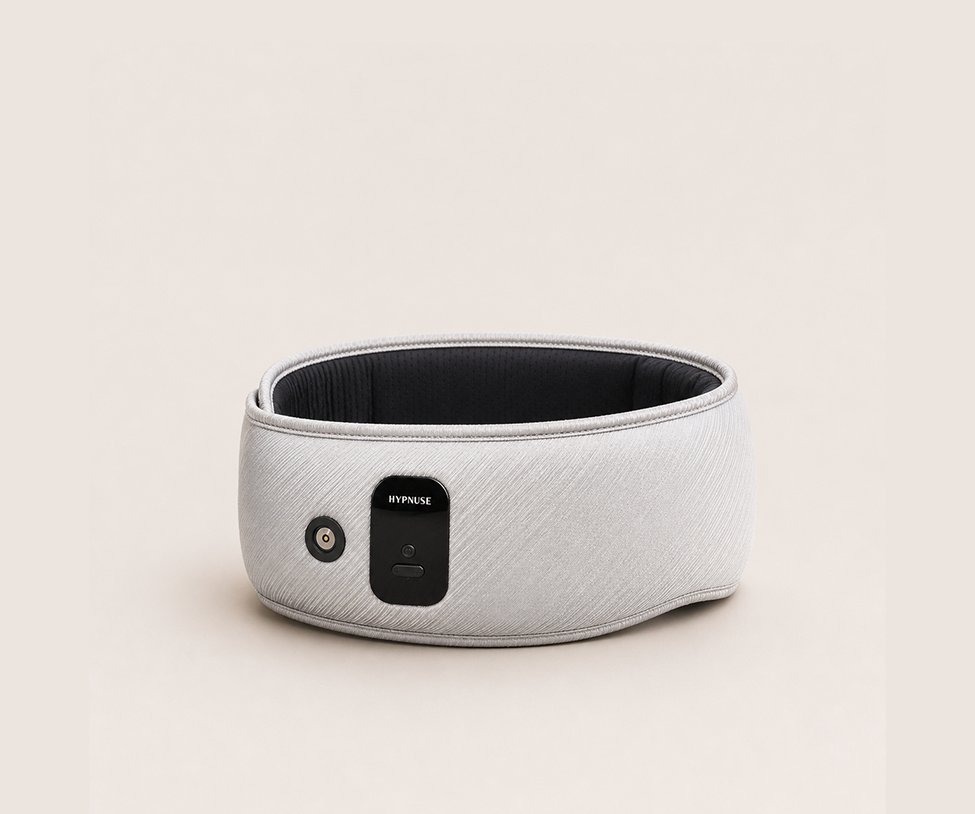
The Hypnuse Pro: Immerse Edition is the model to look at if heart rate data is what you're after.

Hypnuse Rhythm focuses on gentle warmth for a calmer evening.
If you only want better darkness, the Hush is the simple answer. Check each product page for current return and warranty terms before ordering, since terms can differ by model.

Hypnuse Hush: full blackout without the electronics.
When a Heart Rate Pattern Deserves a Doctor's Attention
See a healthcare professional if your heart rate stays unusually high or erratic, or if it comes with chest pain, dizziness, shortness of breath, loud snoring or gasping at night.
A sleep mask and a good routine can support healthy habits, but they can't tell you whether something deeper is going on. Sleep disorders such as sleep apnea, certain medications, thyroid issues and heart conditions can all affect heart rate, and they need proper assessment. Hypnuse's piece on how smart sleep masks monitor sleep apnea explains what this kind of data can and cannot tell you.
Also, be cautious about over-watching your numbers. Some people find that tracking every beat makes them more anxious, which can raise the pulse they're worried about. If numbers stress you out, look at weekly trends and skip the nightly check.
The Bottom Line: A Calmer Pulse, an Easier Night
Your heart rate is one of the quietest signals your body sends about readiness for sleep. A slowing pulse tells you the "go" system is stepping aside. A pulse that won't budge tells you something in your evening is still switched on, whether that's stress, caffeine, light or a late workout.
The good news is that you have more influence than it feels like at 11 p.m. Consistent timing, slow breathing, a cooler, darker room and fewer late stimulants all help your body ease down. A smart sleep mask can make that routine easier to repeat and, on sensor models, easier to learn from. Start with one change this week, give it a few nights, and watch the trend.

A calmer evening starts with a repeatable routine.
Ready to build one? Explore the Hypnuse AI sleep mask wind-down guide or browse the Hypnuse range.
Frequently Asked Questions
Why does my heart rate matter for falling asleep?
A slower, steadier heart rate is a sign that your body has moved from "alert" to "rest" mode. When your pulse stays high at bedtime, your nervous system is still active, which can make it harder to fall asleep and stay asleep.
What is a normal heart rate before sleep?
For most healthy adults, a normal resting heart rate is roughly 60 to 100 beats per minute, and it is often lower in fit people. It also slows further as you fall asleep. Your own normal depends on age, fitness, medication and stress, so trends matter more than a single reading.
How can I lower my heart rate before bed?
Use a consistent wind-down routine, practice slow breathing with longer exhales, avoid late caffeine and hard evening exercise, and keep your room cool, dark and quiet. Gentle warmth and calming sound can also help some people settle.
Can a sleep mask lower my heart rate?
A sleep mask doesn't control your heart, but it can support the conditions that let your heart rate ease: darkness, comfort, and on some models gentle warmth, sound and guided breathing. Sensor-equipped models can also show heart rate trends in an app. Results vary from person to person.
When should I worry about my heart rate at night?
Speak with a healthcare professional if your heart rate stays unusually high or irregular, or if you also have chest pain, dizziness, breathlessness, loud snoring or gasping during sleep. Sleep masks and apps are not medical devices and can't diagnose these conditions.
This article is for general information only and is not medical advice. Hypnuse masks are sleep-routine products, not medical devices.


