

You know the feeling. Seat 34B, a thin blanket, a screen glowing two rows ahead, and eleven hours still to go. Everyone around you seems to be asleep, and you are doing mental math about how little rest you will get before you land. If that sounds familiar, you are in good company. Sleeping on a long-haul flight is one of the hardest sleep challenges most of us face, and the fix is rarely one magic trick. It is a handful of small habits stacked together.
This guide walks through that stack, with a smart sleep mask at the center. We will cover what these masks actually do, how to prepare before you board, a step-by-step routine for the cabin, and how to time your sleep around your destination. Everything here is practical, and nothing requires special equipment beyond a mask, a pillow, and a plan.
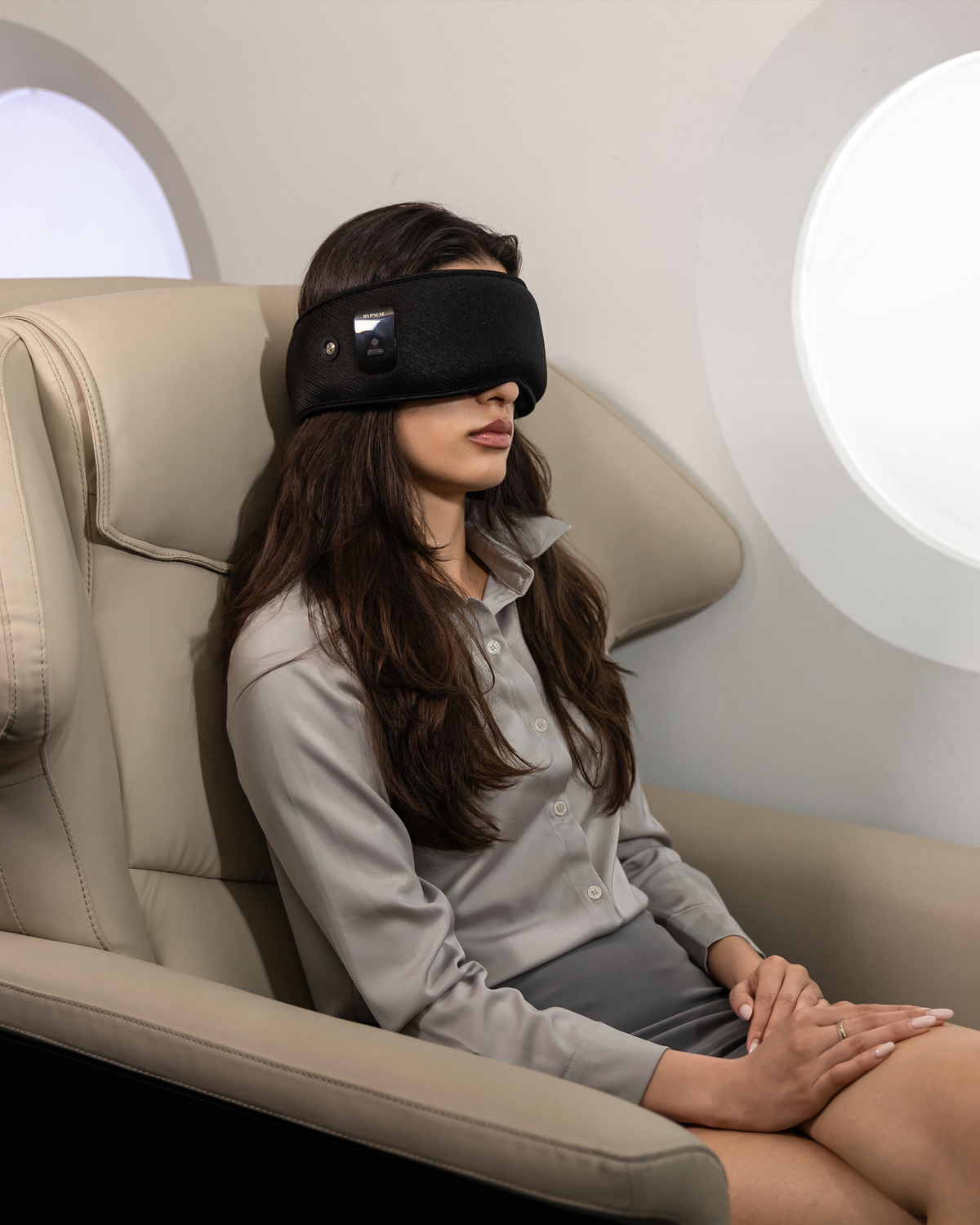
Why Sleeping on a Long-Haul Flight Is So Hard
Planes are close to the worst sleep environment you could design. The cabin is bright whenever someone opens a window shade or turns on a reading light, the engines produce a constant low drone, the seat is upright, and the air is dry. On top of that, your body clock is often running on a different schedule than the flight itself.
Light is the biggest lever here. Your brain uses light to decide when it is daytime, and even a small amount reaching your eyelids can nudge you toward staying alert. Noise and temperature matter too, but light is the one you can block completely with a good mask.
There is also the mental side. Many of us lie there trying to sleep, which is a reliable way to stay awake. The pressure builds the longer you watch the clock. A routine gives your mind something to do besides worry, and that is where a smart mask can earn its place.
| Common cabin sleep blocker | What helps |
|---|---|
| Bright lights and open window shades | A contoured sleep mask that blocks light |
| Engine and cabin noise | Earplugs or noise-reducing headphones |
| Racing thoughts and restlessness | A wind-down routine such as slow breathing |
| Upright seat and neck strain | A supportive neck pillow and a slight recline |
| Cold or dry cabin air | A light layer, a scarf, and plenty of water |
What Is a Smart Sleep Mask?
A smart sleep mask is a light-blocking eye mask with added features designed to help you relax and fall asleep, such as gentle warmth, built-in audio, vibration, or guided wind-down programs. A regular mask only does one job: it keeps light out. A smart one tries to help with the other half of the problem, which is getting your mind and body ready to drift off.
Features vary from brand to brand, so it helps to think in categories. Some masks add soothing heat around the eyes. Some connect to an app for guided breathing or calming audio. Some are built around comfort, with a contoured shape that keeps pressure off your eyelids. If you want to see how one approach works, the AI sleep mask from Hypnuse is built around helping you wind down faster, and the product page explains exactly what it includes.
Does a smart mask replace good habits? No. Think of it like a good pair of running shoes. It makes the activity easier, but you still have to do the running. On a plane, that means pairing the mask with the preparation and timing tips below.
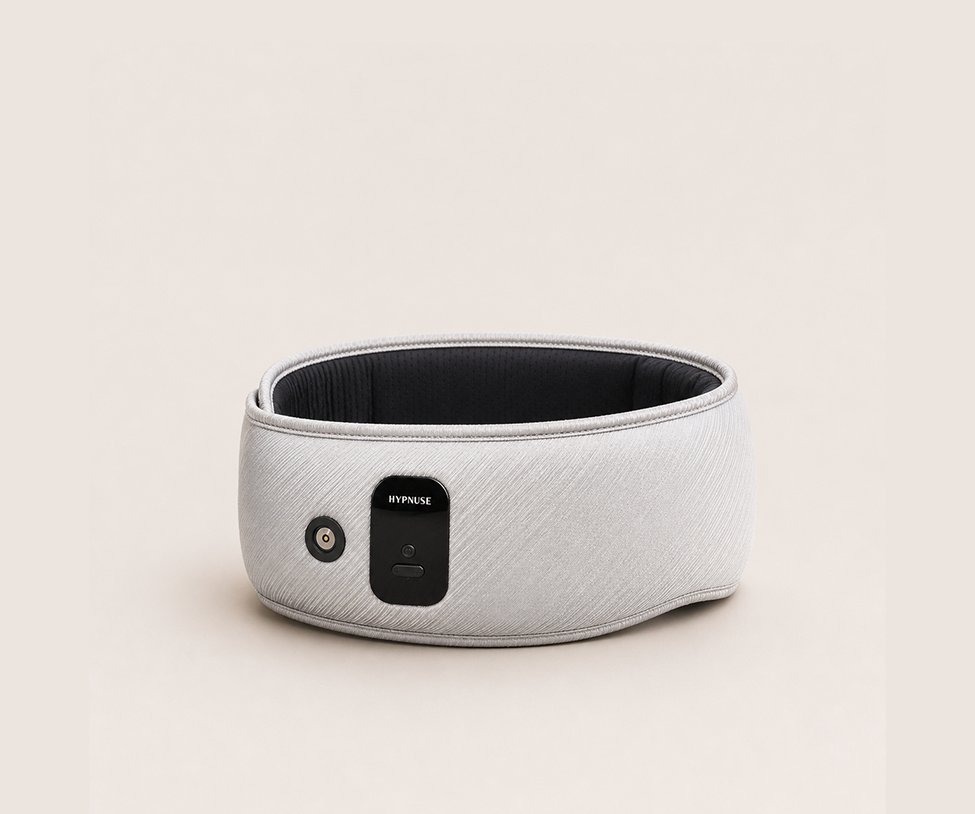
Features That Matter Most for Flying
Not every feature is equally useful at 35,000 feet. Before you buy or pack a mask, it is worth deciding what you actually need. Here is how I would rank the options for a long flight.
Full light blocking comes first. Look for a contoured design that leaves space for your eyes and seals around the nose. Gaps near the nose bridge are where cabin light sneaks in.
Comfort comes second. You may wear this for eight hours or more, so a soft strap and breathable fabric matter. A mask that feels fine for ten minutes at home can feel tight after three hours in an airline seat.
Battery life and charging come third. If the mask has electronics, check how long it lasts on one charge and whether you can top it up from a power bank. A dead mask on the second half of a flight is just an expensive blindfold.
Wind-down features come fourth. Gentle warmth or guided audio can help you settle in. Some people love them, and others prefer silence. Ask yourself which camp you are in, and test it at home first.
| Feature | Why it matters on a plane | Check before you buy |
|---|---|---|
| Light blocking | Cabin lights and window glare are constant | Nose seal and contoured eye cups |
| Comfort and fit | You may wear it for many hours | Soft strap, light weight, no eyelid pressure |
| Battery | Long flights outlast short batteries | Runtime per charge and charging method |
| Wind-down features | Helps you settle in an unfamiliar setting | Whether you actually like warmth or audio |
| Portability | Space in a carry-on is limited | Included case and folded size |
Prepare Before You Board
The best long-haul sleep starts well before the plane door closes. A few small choices in the day or two before travel make a real difference.
Practice with your mask at home. Wear it for a few nights before the trip. This does two things: you learn how to adjust it, and your brain starts to link the mask with sleep. It is a bit like a bedtime cue. When you put it on in seat 34B, your body already knows the script.
Charge everything. If your mask has a battery, charge it the night before and pack the cable. Add a small power bank to your carry-on. Do not rely on seat power working, because not every seat has it.
Choose your seat with sleep in mind. A window seat gives you something to lean against and keeps people from bumping you when they walk past. An aisle seat gives you more freedom to stand up. Pick the one that matches how you sleep.
Plan your food and drink. Heavy meals, lots of caffeine, and alcohol can all make sleep lighter or more broken. Water is your friend, since cabin air is dry. If you are unsure how caffeine or any sleep aid fits with your health, check with your doctor before you travel.
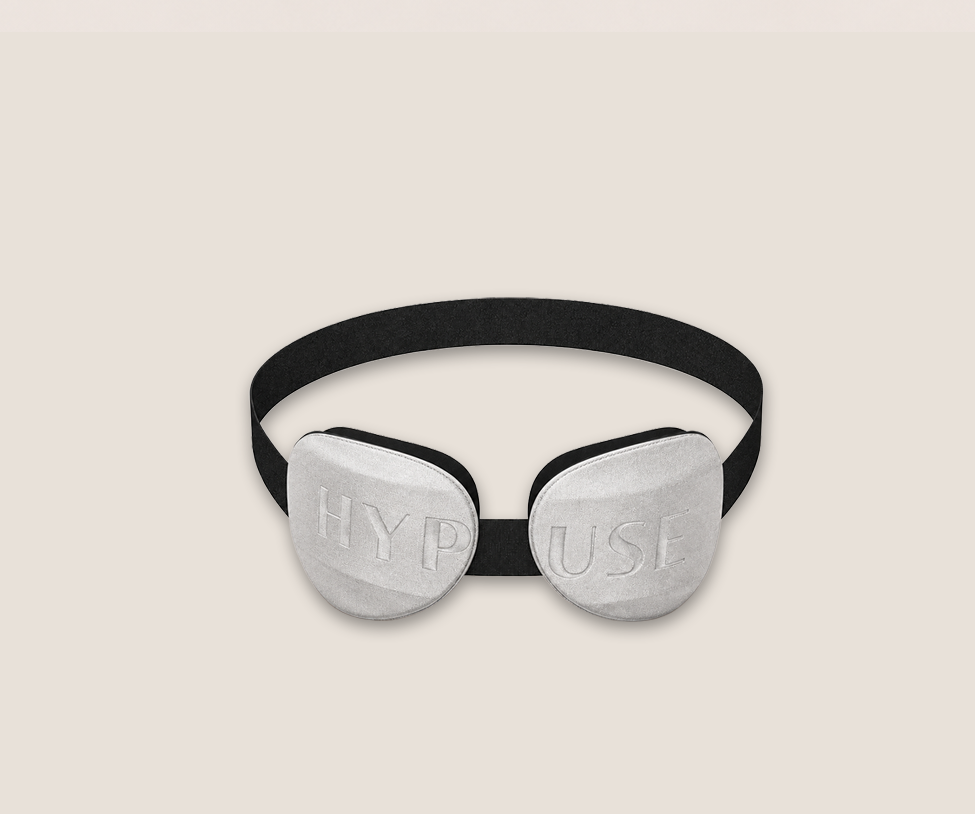
Pack a small sleep kit. Mask, earplugs or headphones, neck pillow, a light scarf or sweater, and lip balm. That is it. Keep it in the seat pocket so you do not have to dig through the overhead bin once the lights go down. If you would rather skip charging altogether, a lightweight non-electronic option like Hypnuse Core is made for travel.
A Step-by-Step In-Flight Sleep Routine
Once you are on board, a short routine beats trying to force sleep. Here is the sequence I would follow.
- Settle your seat early. Adjust the recline, place your neck pillow, and set your blanket before the cabin lights dim. Fiddling in the dark wakes you up.
- Put your phone on airplane mode and lower the brightness. Bright screens work against sleep. Finish your last email or episode, then put the device away.
- Put on your mask and earplugs. Make sure the mask seals around your nose and does not press on your eyelids.
- Start your wind-down. If your mask has a guided program or gentle warmth, switch it on now. If not, try slow breathing: in through your nose for four counts, out through your mouth for six. Repeat for a few minutes.
- Relax your body from the top down. Unclench your jaw, drop your shoulders, soften your hands. This sounds small, but most of us hold tension in our seats without noticing.
- Let thoughts pass. If your mind wanders, return to your breathing. Do not check the time. Checking the time adds pressure, and pressure keeps you awake.
If you cannot fall asleep after a while, that is normal. Stay still with your eyes closed, keep the mask on, and keep breathing slowly. Quiet rest is not the same as deep sleep, but it still helps you feel better than scrolling through a screen. If you want a simple technique to pair with your mask, the slow breathing above is a good place to start, and our related guide on guided breathing for sleep goes deeper.
Timing Your Sleep Around Your Destination
Here is where many travelers go wrong. They sleep whenever they feel tired, which may be the opposite of what their destination needs. A better approach is to decide on your goal before you take off.
Heading east, usually overnight. You will likely land in the morning. Try to sleep for as much of the flight as you can, so you arrive able to stay awake through the local day. Use your mask early and keep the cabin dark.
Heading west, usually during the day. You will land with hours of daylight left. Staying awake for part of the flight and sleeping in a shorter block later can work better. Save your mask for the window you chose.
Match the new time zone when you can. Check what time it will be at your destination and try to sleep when it is night there. Even setting your watch to destination time at boarding helps your mind shift.
Jet lag is a real physical response, and it affects people differently. The NHS notes that jet lag happens when your body clock is out of step with the local time, and it offers practical advice on managing it: NHS guidance on jet lag. When you land, getting outside in daylight is one of the simplest ways to help your body clock adjust.
| Flight direction | Typical arrival | Sleep strategy |
|---|---|---|
| East, overnight | Morning | Sleep as much as possible, mask on early |
| West, daytime | Afternoon or evening | Stay awake early, rest later in the flight |
| Mixed or very long | Varies | Sleep when it is night at your destination |
Common Mistakes to Avoid
Even with a great mask, a few habits can undo your progress. Here are the ones I see most often.
- Wearing an untested mask for the first time on the plane. If it does not fit, you find out at hour two of a ten-hour flight. Test at home.
- Using screens right up until you sleep. Bright light and exciting content keep you alert. Switch to something calm earlier.
- Drinking too much alcohol to "knock yourself out." It may make you drowsy, but sleep tends to be lighter and more broken, and it can leave you dehydrated.
- Tightening the strap too much. Snug is good. Tight gives you a headache and presses on your eyes.
- Ignoring your neck. A poor head position leads to a sore neck and fragmented rest. A supportive pillow is not optional on long flights.
- Forgetting to charge the mask. This one is simple and surprisingly common.
One more habit worth mentioning: do not judge your whole trip by one bad night in the air. Plenty of experienced travelers still sleep poorly on planes. The aim is better rest, not perfect rest.
Safety and Health Notes
Rest is important, but so is moving. On long flights, sitting still for hours can raise the risk of blood clots in the legs for some people. Stand up and walk the aisle when you can, flex your ankles in your seat, and stay hydrated. If you have a medical condition, are pregnant, or take regular medication, speak with your doctor before a long trip, especially about sleep aids.
If your mask has heating or electronic parts, follow the maker's instructions. Do not use it if it feels too hot, looks damaged, or irritates your skin. Do not use any device on or near your eyes if you have an eye condition without checking with your eye doctor first. This article is general travel advice and is not a substitute for medical guidance.
Final Thoughts
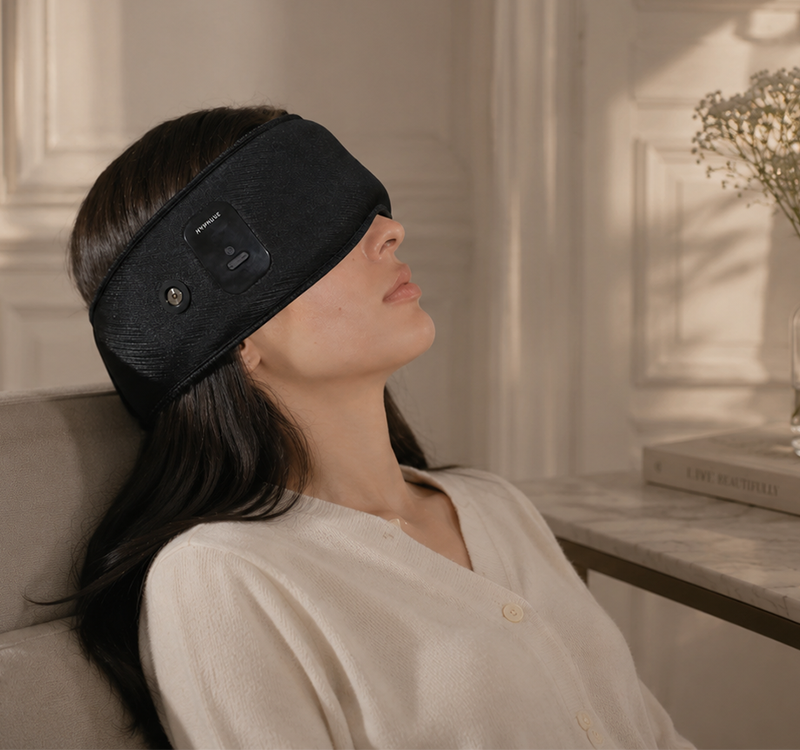
Sleeping on a long-haul flight is not about finding one perfect product. It is about stacking small advantages: a dark environment, a calm mind, a supported neck, good timing, and a routine your body recognizes. A smart sleep mask helps with the first two, and the rest is up to your preparation.
Start by testing your mask at home, pack a small sleep kit, and decide before takeoff when you want to sleep. If you are looking for a mask built to help you wind down faster, take a look at the Hypnuse AI sleep mask, or browse more sleep guides on the Hypnuse website. Safe travels, and sleep well up there.
Frequently Asked Questions
Can a sleep mask really help me sleep on a plane?
Yes, for many people. A mask blocks cabin light, which is one of the biggest barriers to sleep on a flight. It will not remove noise or seat discomfort, so pair it with earplugs or headphones and a neck pillow. Results vary from person to person.
What is the difference between a smart sleep mask and a regular one?
A regular mask blocks light. A smart mask adds features that help you relax, such as gentle warmth, audio, or guided wind-down programs. Which one you prefer depends on whether you want a simple blackout or extra support to settle your mind.
How long should I wear a sleep mask on a long-haul flight?
Wear it for as long as you want to sleep or rest, and take it off when you want to be alert. Check that the strap is not too tight and that nothing presses on your eyelids. If it feels uncomfortable or irritates your skin, remove it and take a break.
When should I sleep on a long-haul flight to reduce jet lag?
Try to sleep when it is night at your destination. For eastbound overnight flights, that usually means sleeping as much as possible. For westbound daytime flights, staying awake for part of the trip and resting later often works better. Getting outdoors in daylight after you land also helps.
Is it safe to sleep for the whole flight?
Short stretches of sleep are fine for most healthy people, but sitting still for many hours is not ideal. Move around when you can, stretch your legs, and drink water. If you have health concerns or are at higher risk for blood clots, ask your doctor for advice before you fly.


