

The best sleep mask for naps blocks enough light to help you drop off quickly, feels comfortable for a short rest, and goes on and off in seconds. That list is shorter than most buying guides suggest. A nap is a short window, so a mask that needs fiddling, charging or a long warm-up eats into the very rest you're after.
This guide covers what to look for in a sleep mask for naps, how long a power nap should run, and how to wake up sharp instead of foggy. It also shows where two Hypnuse masks fit: Hypnuse Core at $15 for desk-drawer and carry-on naps, and Hypnuse Hush at $35 when you want full blackout and softer sound. Specs and prices come from the Hypnuse product pages.
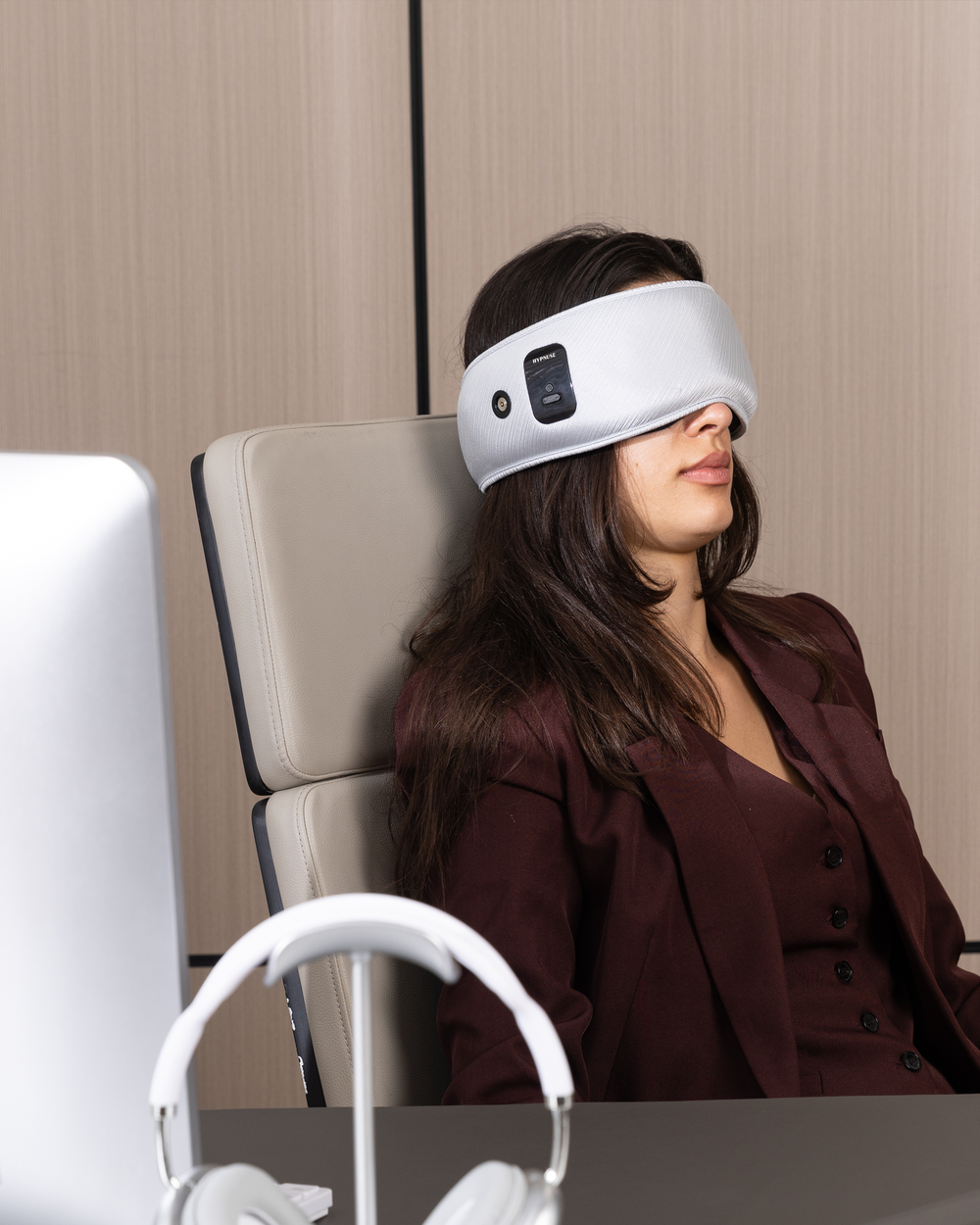
A good nap mask turns a busy workday into a ten-minute reset.
What makes a good sleep mask for naps
Night masks and nap masks have different jobs. Overnight, you can live with a mask that takes a few minutes to adjust, because you'll wear it for hours. For a nap, the mask has to disappear fast. Picture the real situations: a quiet corner at the office, a parked car on a lunch break, a long flight, a sofa with afternoon sun pouring through the window. Each one asks something different of the mask.
Here's what matters most:
| Feature | Why it matters for naps | What to check |
|---|---|---|
| Easy light control | Nap spaces are rarely fully dark | Adjustable covers or a contoured seal at the nose bridge |
| Fast on and off | You have minutes, not hours | A simple strap, with no pairing or charging |
| Light, pressure-free fit | Pressure on the eyelids keeps you alert | A raised eye cavity and a lightweight build |
| Quiet closure | Rustling or snagging pulls you out of drifting off | Silent hook-and-loop that won't catch your hair |
| Breathability | Warm rooms make short naps sweaty | Cooling layers and breathable fabric |
| Portability | The best nap mask is the one you have with you | Fits a bag or a desk drawer |
| Washable cushion | Shared bags and desks get grubby | A removable, cleanable pad |
Notice what's missing: heat, sensors and apps. They can be wonderful overnight, and Hypnuse makes AI sleep masks for exactly that. For a quick nap, simplicity usually wins.
How long should a power nap be?
A power nap should last about 20 minutes, and no longer than 30. That's the guidance from the Sleep Foundation and Mayo Clinic, and the reason is sleep inertia: the groggy, disoriented feeling you get when you wake from deeper sleep. Short naps keep you in lighter stages, so waking up is easier. Mayo Clinic notes that post-nap grogginess often fades within about 35 minutes, but you'd rather skip it altogether.
The most quoted research comes from NASA. In a 1995 study of long-haul pilots, those who napped in the cockpit slept about 26 minutes on average and showed up to 54% better alertness and 34% better performance than pilots who didn't nap, according to the Sleep Foundation's summary. It's a cockpit study, not an office one, but it shows why a short, planned rest works.
| Nap length | What to expect | Best for |
|---|---|---|
| About 10 to 20 minutes | A quick lift in alertness with little grogginess | Desk breaks and the midday slump |
| 20 to 30 minutes | A solid boost, and the usual ceiling for a power nap | An early-afternoon reset |
| 30 to 60 minutes | Higher risk of sleep inertia | Usually best avoided |
| About 90 minutes | Can feel refreshing, but late naps may hurt night sleep | Shift workers or people paying off sleep debt |
One practical note: falling asleep takes a few minutes, so a 20-minute alarm usually gives you less than 20 minutes of actual sleep. That's fine. A short nap that leaves you clear-headed beats a long one that leaves you foggy.
Power nap tips that actually work
The mask is only one piece. These habits do most of the heavy lifting:
- Nap early. Mayo Clinic says napping after about 3 p.m. can make it harder to sleep soundly at night, and the Sleep Foundation suggests napping at least eight hours before bedtime.
- Set an alarm, and skip snooze. Snoozing can drag you into deeper sleep, which is exactly what you're trying to avoid.
- Darken the space. The Sleep Foundation describes a good nap setting as cool, quiet and dark, and the Australian Sleep Health Foundation suggests closing the curtains or wearing an eye mask to make it as dark as possible. This is where a sleep mask for naps earns its keep.
- Consider a caffeine nap. If caffeine suits you, drink a coffee quickly, then nap for about 20 minutes. Caffeine takes roughly 30 minutes to kick in, so you wake as it starts working. The Sleep Foundation's coffee nap guide also flags that caffeine isn't right for everyone, and that it can disrupt sleep if taken too close to bedtime.
- Silence your phone. Turn it face down or off. One buzz resets the whole attempt.
- Wake up slowly. Stretch, walk around and get some daylight. Give yourself a few minutes before tasks that need sharp reactions.
- Protect your night sleep. If you already struggle to fall or stay asleep at night, Mayo Clinic warns that napping may make that worse.
For more routines that work alongside naps, browse the Hypnuse sleep tips page.
Hypnuse Core: the budget sleep mask for naps
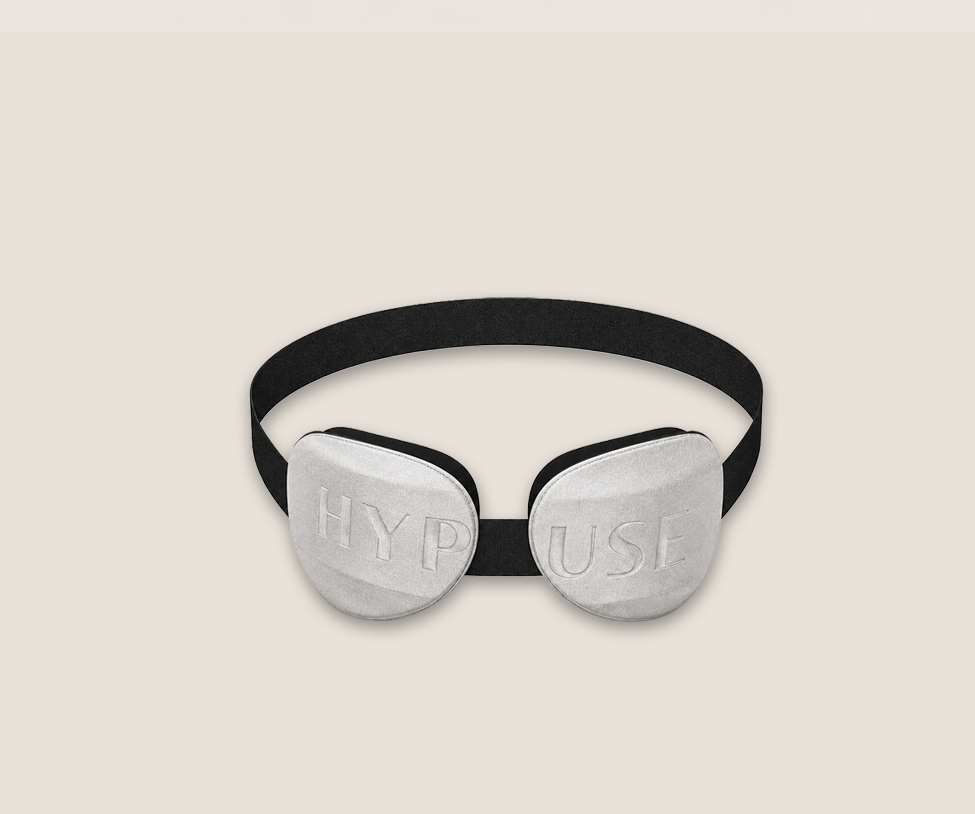
Hypnuse Core: light control you can adjust in seconds.
Hypnuse Core is built around one idea: you decide how much light reaches your eyes. Rotate the outer eye covers open for soft, filtered light, or close them for a darker, more restful setting. The detachable design pairs a soft semi-opaque lining with a transparent cooling inner layer, so you can adapt it to a bright office, an airplane cabin or a sunny living room.
The comfort details suit short rests. The hook-and-loop closure is silent and snag-resistant, so it won't rustle in a quiet room or catch your hair. The strap is adjustable and removable, and the cooling construction is meant to avoid the heat buildup that ordinary eye masks can cause. Interchangeable covers let you change the look, too.
Core is non-electronic, and at $15 it's inexpensive enough to keep a spare in your desk, your carry-on and your gym bag. That's the real advantage for naps: a mask you actually have on you gets used.
Be realistic about what it is, though. Core is an adjustable, light-focused mask. If you need a full seal around the nose and edges, or want some help with sound, Hush is the better fit.
Hypnuse Hush: full blackout and softer sound for deeper naps
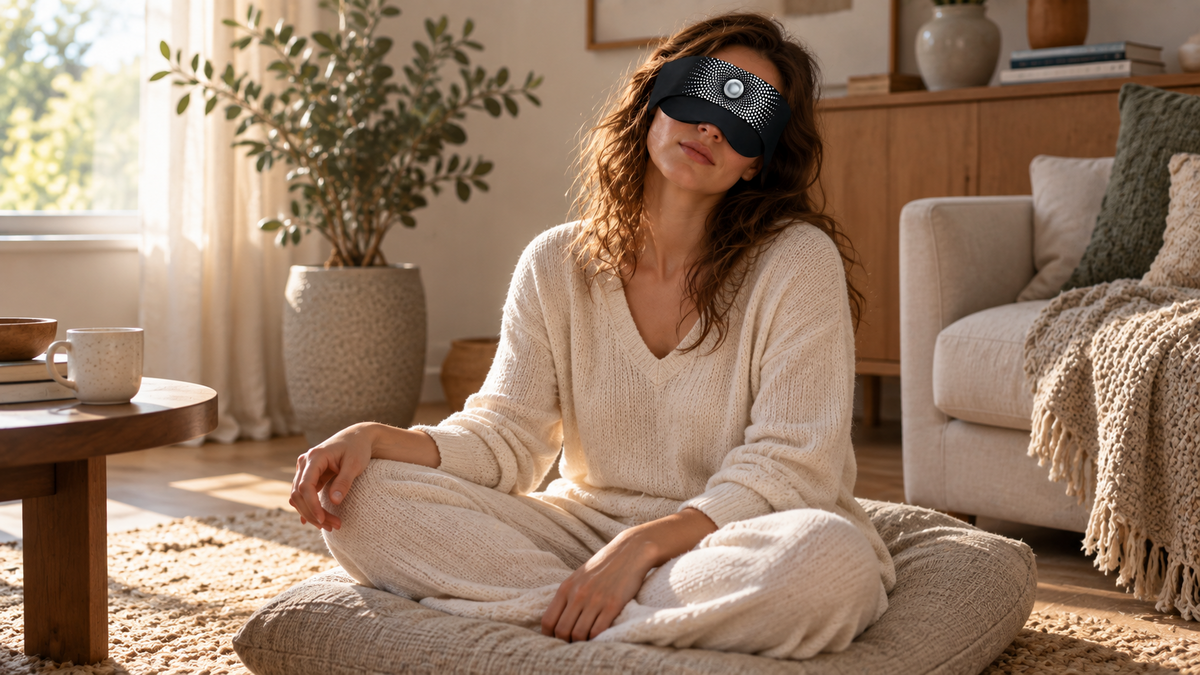
Hush uses a continuous seal around the eyes and nose bridge to keep stray light out.
Some nap spots fight back: an open-plan office, a noisy household, a daytime flight, a bedroom with the sun slanting in. Hypnuse Hush is designed as a 100% blackout mask. The contoured eye area, flexible nose bridge and wraparound edge work together as one 360° light seal, without pressing on your eyes.
Sound is the other half. The left and right ear covers slide independently, so you can line them up with your ears. Hypnuse lists 24.5 dB of passive noise reduction, which helps soften snoring, traffic and background chatter. It won't silence a room, and no mask will, but it takes the sharp edges off. If noise is your main trigger, our guide to white noise and soundscapes for sleep explains when to add audio.
Hush weighs 137g. The eye cushion lifts out in seconds, so you can hand-wash or wipe it clean, and a hidden side pocket holds an optional aroma pad if you like a drop of essential oil. The product page lists complimentary delivery and a six-month replacement warranty at $35.
If light is what keeps interrupting you, Hush is also our pick in the guide to the best sleep mask for light sleepers. And if you're wondering whether curtains alone could do the job, see sleep mask vs blackout curtains.
Core or Hush: which sleep mask for naps should you pick?
| Hypnuse Core | Hypnuse Hush | |
|---|---|---|
| Price | $15 | $35 |
| Light control | Adjustable: rotate covers open or closed | 100% blackout with a 360° seal |
| Sound | Built around light control | 24.5 dB passive noise reduction |
| Comfort | Silent hook-and-loop, cooling layers, adjustable strap | Zero pressure on the eyes, 137g, washable cushion |
| Extras | Interchangeable covers | Aroma pad pocket, six-month replacement warranty |
| Best for | Desk-drawer, carry-on and quick naps | Bright, noisy or shared spaces and deeper rest |
Choose Core if you want the cheapest, most portable option and your nap spot is only moderately bright. Choose Hush if light or noise keeps pulling you out of a nap, or if you also want a mask for nights and travel. If you'd like warmth, built-in sound and sleep tracking, the Hypnuse Pro goes further, though it's more than most naps need. Our honest buyer's guide to smart sleep masks can help you decide.
Where a nap mask earns its keep
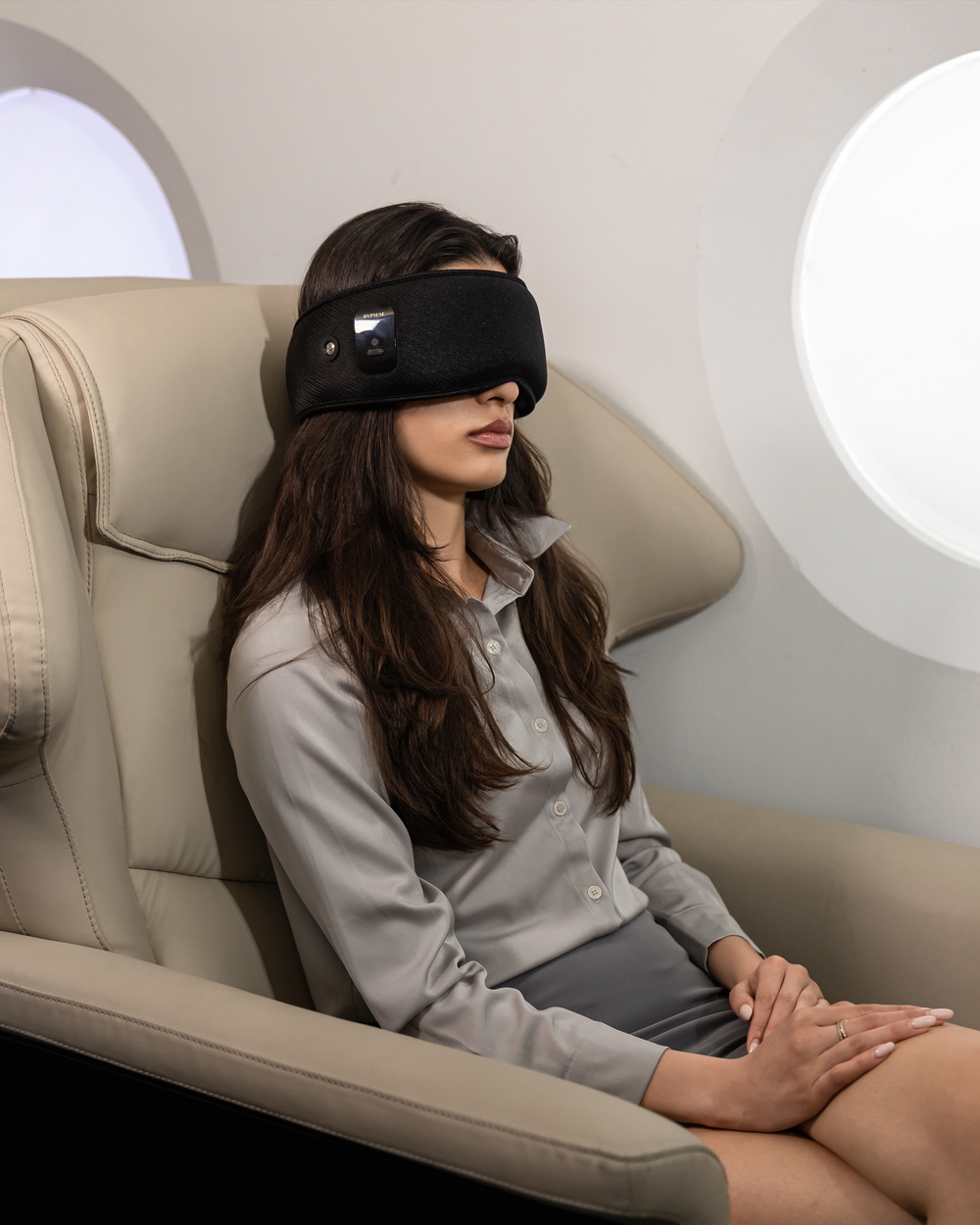
Cabin lights, window shades and neighbors: a mask handles all three.
- At the office. Fluorescent lights and passing colleagues make daytime sleep hard. A mask signals "do not disturb" and gives your brain a dark cue. If you're equipping a team, Hypnuse's For Businesses page is the place to start.
- On flights and trains. A compact mask is easy to pack, and it beats hoping the window shade stays down.
- At home. A living-room sofa gets bright in the afternoon. A mask is easier than rearranging curtains.
- Around shift work. The Sleep Foundation notes naps can be especially useful for shift workers who struggle to get enough sleep. Daylight finds every gap, so a seal matters more.
Nap mistakes that quietly ruin the rest
- Napping too late. A 4 p.m. nap can cost you at bedtime.
- Sleeping too long. Past about 30 minutes, you risk grogginess.
- Over-tightening the strap. A snug fit seals; a tight one gives you a headache and lifts the edges.
- Skipping the alarm. "Just closing my eyes" has a way of becoming an hour.
- Using naps to replace night sleep. The Sleep Health Foundation is clear that a nap is a short-term fix, not a substitute for good sleep at night.
When a nap isn't the right fix
A sleep mask is a comfort tool, not a treatment. If you need long naps every day despite a full night's sleep, or you feel exhausted for weeks without an obvious cause, talk to a doctor. Mayo Clinic notes that an unexplained rise in the need for naps can point to a medication effect, a sleep disorder or another health condition. Stop using any mask if it irritates your skin, and check with a clinician first if you have an eye condition. Never nap while you're driving; if you're sleepy on the road, pull over somewhere safe and park first.
Final thoughts
The best sleep mask for naps is the one that's easy, comfortable and always within reach. Keep your nap to about 20 minutes, nap before mid-afternoon, and control the light. For a low-cost, portable option, start with Hypnuse Core. For full blackout and softer sound, step up to Hypnuse Hush. You can compare the whole range in the Hypnuse eye mask collection.
Frequently asked questions
What is the best sleep mask for naps?
The best sleep mask for naps is light, quick to put on, and good at controlling light. Hypnuse Core ($15) offers adjustable light control and a silent closure for desk and travel naps. Hypnuse Hush ($35) adds a 360° blackout seal and 24.5 dB of passive noise reduction.
How long should I nap with a sleep mask?
Aim for about 20 minutes, and keep it under 30. Longer naps raise the chance of sleep inertia, that heavy, foggy feeling after waking. Set an alarm before you drift off.
Is it OK to nap every day?
For many healthy adults, a short daily nap is fine. If it makes night sleep worse, shorten it or move it earlier. If you need long naps despite enough nighttime sleep, speak with a doctor.
Can I use a sleep mask for naps at work?
Yes, where your workplace allows it. Choose a quiet, low-traffic spot, set an alarm, and use a mask you can slip on and off quickly. Core fits a desk drawer easily.
Do I need a smart sleep mask for naps?
Usually not. Heat, sensors and apps are most useful overnight. For naps, a simple mask that blocks light and stays comfortable does the job. If you want tracking and sound, look at the AI sleep mask range.


