

You are lying in the dark, the fridge hums, a neighbor's door closes, and your brain decides it is the perfect moment to replay your whole day. So you reach for sound. But which kind? A steady hiss, a rainy forest, or something in between?
Sound is one of the oldest bedtime tools there is, and it is also one of the most confusing to shop for. This guide explains what white noise and soundscapes actually are, what the research does and does not show, and how to work out which one suits your nights. If you want the wider picture of how darkness, warmth, breathing and sound work together, our guide to the AI sleep mask and how it helps you wind down covers it step by step.
Quick answer: White noise is a constant, even hiss that covers up sudden sounds. Soundscapes are layered, natural or musical recordings that give your mind something gentle to follow. If noise wakes you, steady sound usually works better. If your mind races, a calm soundscape may help more. Both work best at low volume and as part of a regular routine.

A quiet room, low sound and darkness: the three things most bedtime routines try to combine.
What Is the Difference Between White Noise and Soundscapes?
White noise is a sound that contains all audible frequencies at roughly equal strength, which is why it sounds like a hiss or radio static. Because it never changes, your ear stops treating it as news. That is its entire job.
Soundscapes are a broader category. Think rainfall, ocean waves, a forest at night, a distant thunderstorm or slow ambient music. They are usually recordings or layered mixes, and they tend to have texture and slow movement rather than a flat wall of sound.
There is also a family of "colored" noises worth knowing, because many apps and devices offer them:
- White noise: bright and hissy, like static or a fan on high.
- Pink noise: softer, with more weight in the lower tones, like steady rain or wind.
- Brown noise: deep and rumbling, like a distant waterfall or a low engine.
| Feature | White noise | Soundscapes |
|---|---|---|
| Character | Constant, even, no variation | Layered, textured, slowly changing |
| Main benefit | Masks sudden or intermittent noise | Gives the mind a calm focus point |
| Possible downside | Can feel harsh or fatiguing to some | Sudden elements (a bird call, thunder) can startle |
| Often suits | Light sleepers, noisy buildings, shift workers | Busy minds, wind-down time, meditation |
What Does the Research Actually Say?
Here is the honest version: the evidence is encouraging but not strong. A 2021 systematic review published in Sleep Medicine Reviews looked at studies of noise as a sleep aid and concluded that the overall quality of evidence was low, with some studies hinting at benefit and others showing little effect. In other words, sound helps some people, and nobody can promise it will help you.
The most believable explanation is simple masking. Your brain keeps a light watch on your surroundings even during sleep, and what tends to disturb you is not loudness itself but contrast: a quiet room interrupted by a car door. A steady background sound narrows that gap, so the same car door stands out less.
Researchers have also explored whether pink noise timed to brain rhythms can deepen sleep in small lab studies, including in older adults. That work used specialized equipment and carefully timed sound. It is interesting, but it should not be read as proof that a bedside speaker playing rain will do the same thing.
Two practical takeaways follow from this. First, treat sound as an experiment you run on yourself, not a guaranteed fix. Second, if you have persistent trouble sleeping, no sound will replace a conversation with a healthcare professional. The CDC's sleep resources are a reliable place to start for general guidance and for knowing when to seek help.
Which Sound Suits Which Kind of Sleeper?
Rather than asking which sound is "best," ask what is actually keeping you awake. The problem usually points to the tool.
| Your main problem | Try first | Why |
|---|---|---|
| Traffic, neighbors or a snoring partner | White or pink noise | A flat sound covers irregular noise most reliably |
| Racing thoughts at bedtime | A calm soundscape such as rain or waves | Gentle movement gives attention somewhere to rest |
| Waking in the early hours | Steady, low brown or pink noise | Deeper tones feel less intrusive in a quiet room |
| Daytime sleep after a night shift | White noise plus a blackout mask | Daytime sound is unpredictable; steady cover helps |
| Travel, flights and hotels | Steady noise or ambient music | Cabin and corridor noise is constant or irregular |
Imagine two people. One lives above a restaurant and wakes at every burst of laughter from the street. The other sleeps in a silent house but lies awake rehearsing tomorrow's meeting. The first person needs cover. The second needs a gentle focus. Same bedtime, different tools. That is why a single "best sound" answer rarely holds up.
How to Test Sounds Without Wasting Weeks
Sleep advice often fails because people change five things at once and then cannot tell what worked. A simple, patient test avoids that.
- Change one thing only. Keep your bedtime, room temperature and caffeine habits the same while you test.
- Pick one sound for a week. A single night tells you almost nothing, because sleep varies from night to night for many reasons.
- Start quiet. Set the volume just above the background noise you want to cover, then leave it.
- Note two things in the morning. How long did it feel like it took to settle, and how many times did you wake? A rough note is enough.
- Switch and compare. After a week, try the other type for a week and compare your notes.
- Keep what works, drop what doesn't. If neither helps, that is useful information too, and a reason to look at other parts of your routine.
If tracking is new to you, this explainer on sleep stage tracking shows how to read trends without obsessing over a single night.
Volume, Timing and Safety
More sound is not better sound. Playing audio all night at a high level close to your ears is not a good idea, and a few simple habits keep this safe.
- Keep it low. The aim is to soften sudden noises, not to drown the room. If you would struggle to hold a conversation over it, it is too loud.
- Give it distance or a gentle fit. A speaker across the room is gentler than one pressed against your ear. Earbuds worn all night can be uncomfortable and are easy to lose in the bed.
- Consider a timer. Some people prefer sound that fades out after they fall asleep. Others need it all night to cover early-morning noise. Try both.
- Stay aware of safety sounds. Make sure you can still hear smoke alarms, a baby monitor or anything else that needs your attention.
- Be careful around infants. If you are thinking about sound for a baby, follow your pediatrician's guidance on volume and device placement.
- Talk to a professional about ringing in the ears. Some people with tinnitus find background sound helpful, but an audiologist can advise on what suits you.
One more point: if you cannot sleep without sound, that is not a failure. It only means you have found a useful cue. The thing to watch is whether it still feels comfortable rather than whether you are "dependent."
Where a Sleep Mask With Built-In Sound Fits
The usual headache with bedtime sound is the delivery. Phone speakers sit on a nightstand and wake your partner. Earbuds fall out or press into your ear when you roll over. A sleep mask with built-in speakers sidesteps both problems, because the sound is close to you and the mask stays put.
Select Hypnuse models include in-built speakers, Bluetooth audio and white noise, and the Hypnuse Pro: Immerse Edition lists 14 built-in soundscapes. The same masks block light with a contoured shape, add adjustable gentle heat on supported models, and can guide your breathing, so sound becomes one layer of a routine instead of a separate gadget to manage.
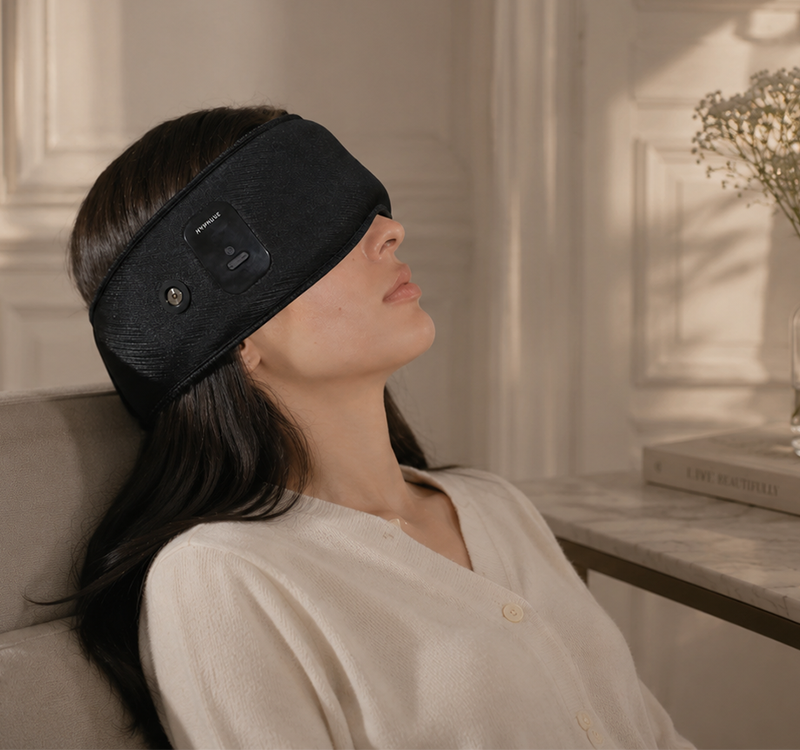
The in-built speakers sit in the mask itself, so there are no earbuds to dislodge during the night.
Not every mask in the range has sound, and that is worth knowing before you buy. Here is a quick guide:
| Model | Best for |
|---|---|
| Hypnuse Pro: Immerse Edition | Sound, heat, breathing guidance and sensors in one mask |
| Hypnuse Rhythm | A warmth-led evening routine |
| Hypnuse Hush | Blackout darkness without electronics |
| Hypnuse Core | Lightweight, non-electronic travel use |
Check each product page for the exact features of the model you are considering, since sound is limited to select models. A mask is not a medical device and will not treat a sleep disorder, but as a delivery method for sound it is a practical one.
A Simple Sound-First Wind-Down Routine
Sound works best when it arrives at the same point each evening, because repetition teaches your body what comes next. Here is a gentle sequence you can adapt.
- Pick a repeatable start time. Consistency matters more than the exact hour.
- Dim the room and put screens aside. Calmer surroundings make any sound more effective.
- Choose your sound in advance. Deciding in bed turns relaxation into another task.
- Set the volume low and leave it alone. Resist the urge to fiddle once you are lying down.
- Add darkness. A contoured mask removes the last of the light, and the sound closes off the noise.
- Follow your breathing. Slow, paced breaths pair naturally with a steady soundscape.
- Let it go. If you are still awake after a while, that is normal. Stay calm and keep the routine rather than switching things around.
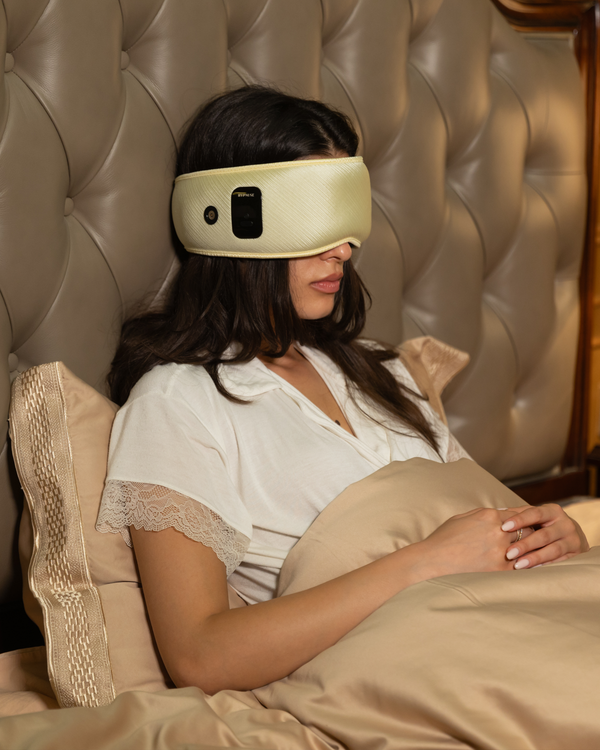
A repeatable evening routine matters more than any single sound.
For the habit side of the picture, our guide to sleep hygiene and the Sleep Tips page cover the rest of the day. If you want the full wind-down approach in one place, start with the Hypnuse AI sleep mask wind-down guide.
Frequently Asked Questions
Is white noise or a soundscape better for sleep?
Neither is better for everyone. White noise tends to work well when sudden sounds wake you, because it covers them evenly. A calm soundscape may suit you better if a busy mind is the issue. Try each for about a week and compare how you feel.
Can I sleep with white noise on all night?
Many people do, as long as the volume stays low and comfortable. Keep the sound well below the level of conversation and avoid placing a speaker right against your ear. If you notice ear discomfort or ringing, stop and speak to a healthcare professional.
What is the difference between white, pink and brown noise?
All three are steady sounds, but they differ in tone. White noise is bright and hissy, pink noise is softer with more low tones, and brown noise is deep and rumbling. Which one feels best is personal, so sample all three at low volume.
Do nature sounds help you fall asleep?
For many people, yes, especially steady sounds like rain or gentle waves. Avoid recordings with sudden elements such as loud bird calls or thunder claps, which can startle you awake. Evidence for sound as a sleep aid is limited, so treat it as something to test.
Does a sleep mask with built-in speakers work better than earbuds?
It can be more comfortable, because there is nothing to press into your ear or fall out when you turn over. Select Hypnuse masks include in-built speakers, but not every model does, so check the product page for the one you want.
The Bottom Line
White noise and soundscapes do different jobs. White noise covers sudden disturbances. Soundscapes give a restless mind something calm to follow. The research is mixed and honest advice is to test, not assume, so run a one-week trial of each, keep the volume low, and pay attention to what actually helps. Pair your chosen sound with darkness, a steady routine and a mask you find comfortable, and you give your body its best chance to settle.
If you would like sound, darkness, warmth and breathing guidance in one wearable, explore the Hypnuse AI sleep mask range, or browse the Hypnuse homepage to compare models.
This article is for general information and is not medical advice. Hypnuse masks are sleep-routine products, not medical devices. If you have persistent trouble sleeping, talk to a healthcare professional.


