

You have probably done it without thinking: a hot shower after a long day, a warm drink on the sofa, a heat pack on a stiff neck. It feels like the right thing to do before bed. But does it actually help you fall asleep, or is it just comforting? The honest answer is "yes, often, if you get the timing right," and the details matter more than most people expect.
This guide walks through what research on warmth and sleep actually says, why the effect works, how to use heat tonight without overdoing it, and where a heated sleep mask fits into the picture. If you are a buyer weighing up options, we will also be straight about what heat can and cannot do.
Quick answer: Yes, warmth before bed can help you fall asleep faster, but the benefit comes from when you apply it. A warm bath or shower taken 1–2 hours before bedtime has the strongest research support. Gentle heat around the eyes, such as from a heated sleep mask, is better thought of as a wind-down cue than a sleep guarantee. Results vary from person to person.
What does the research say about heat before bed?
The best-known evidence comes from a 2019 systematic review and meta-analysis published in Sleep Medicine Reviews, led by researchers at The University of Texas at Austin. The team screened 5,322 studies and narrowed them down to 17 that measured how water-based warming affects sleep. You can read the university's summary of the findings on the Cockrell School of Engineering website.
Their conclusions were specific, which is what makes them useful:
- Temperature: water of about 104–109°F (40–42.5°C) was linked to better sleep quality.
- Timing: a bath or shower 1–2 hours before bedtime was the sweet spot.
- Result: on average, people fell asleep about 10 minutes faster when the timing was right.
- Duration: as little as 10 minutes was enough to see a benefit.
That is not a miracle cure, and ten minutes will not transform someone with a serious sleep problem. But for a free, low-effort habit, it is a meaningful nudge. It is also worth noticing what the research did not say. It studied warm baths and showers. It did not prove that every heated product works the same way, so anyone selling you a heated gadget as a sleep fix should be able to explain the claim in plain terms.
Why does warmth help you fall asleep? The body-temperature link
Here is the part that surprises people: warming up helps you sleep because it helps you cool down.
Your core body temperature follows a daily rhythm. It tends to dip in the evening as your body prepares for sleep, and it stays lower through the night. The researchers behind the meta-analysis suggest that warm water draws blood toward the skin, which helps your body release heat and supports that natural drop. When you step out of a warm bath, you cool down a little faster than you would have otherwise, and your body reads that as a cue that bedtime is near.
That also explains the timing rule. A bath taken fifteen minutes before bed is too late. Your body is still warm when you climb under the covers, and the cooling effect has not had time to play out. Give it an hour or two, and the dip arrives right as you are getting sleepy.
| When you warm up | What tends to happen |
|---|---|
| 1–2 hours before bed | Your body has time to cool afterward, which supports sleepiness |
| About 15 minutes before bed | You may still be warm at lights-out, which can make settling harder |
| A bedroom that stays hot all night | Staying warm can work against the natural evening cool-down |
The takeaway for everyday life is simple. Warmth is a timing tool, not a "more is better" tool. A cool, comfortable bedroom and a warm wind-down earlier in the evening work together, not against each other.
Bath, shower, warm drink or heated mask: which kind of heat is best?
Not every source of warmth does the same job. Some change your whole-body temperature. Others mainly add comfort and signal "the day is over." Here is a practical comparison.
| Option | What it does | Best for |
|---|---|---|
| Warm bath or shower | Warms the whole body, then lets it cool; the approach with the most research behind it | Anyone who can fit it in 1–2 hours before bed |
| Warm drink (caffeine-free) | Comforting ritual, mild warmth | Building a calm evening habit |
| Heat pack on neck or shoulders | Eases localized muscle tension | People who carry stress in their upper body |
| Heated sleep mask | Gentle warmth around the eyes plus darkness, worn at the moment you settle in | People who want a repeatable "lights out" cue |
Notice that these are not rivals. A warm shower early in the evening and a heated mask at bedtime do different jobs, and many people use both. If you only have time for one thing, the bath or shower is the better-supported choice. If your real problem is that your mind will not switch off once you are in bed, a mask-based ritual may be the better fit.
Where a heated sleep mask fits into your wind-down
A shower happens in the bathroom. A mask happens in bed, at the exact moment you are trying to let go. That difference is why heated masks have become a popular wind-down tool.
Warmth around the eyes is a familiar comfort. Most of us have pressed a warm cloth to tired eyes at the end of a long day. A heated mask turns that into a repeatable routine: you put it on, the room goes dark, gentle warmth settles in, and your body starts to associate that sequence with sleep. The cue matters as much as the heat itself.
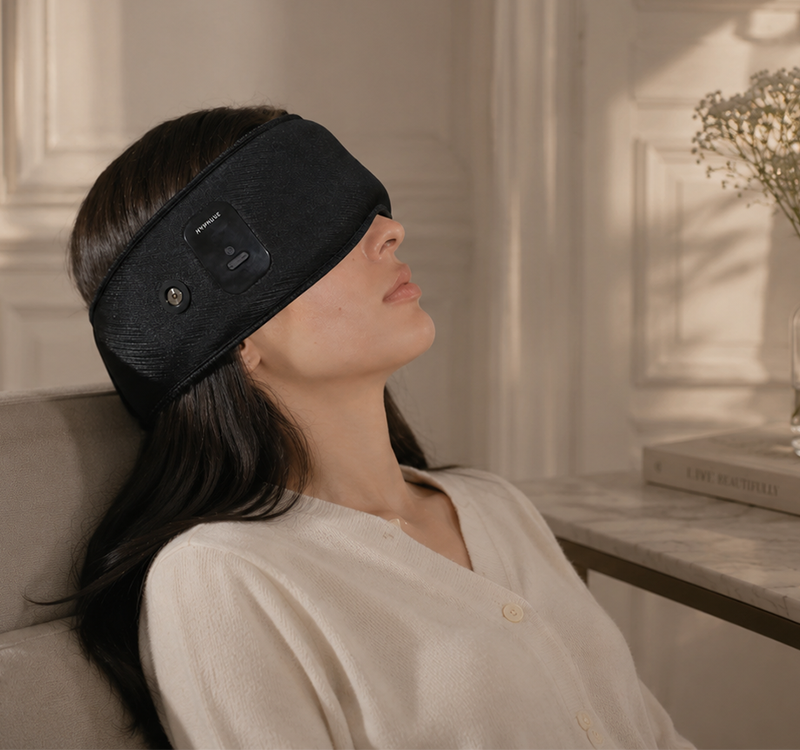
The Hypnuse Rhythm is an intelligent heating eye mask designed around this idea. At the top of the range, the Hypnuse Pro: Immerse Edition adds guided breathing, built-in sound and sensors, with five adjustable heat levels from 38°C to 46°C (about 100–115°F). Starting at the lowest comfortable level and moving up gradually is the sensible approach with any heated product near your eyes.

Hypnuse Rhythm: an intelligent heating eye mask for a warmth-led evening routine.
To be clear about what we are claiming: a heated mask is not a replacement for the whole-body warming studied in the bath research, and we are not saying it speeds up sleep by a set number of minutes. What it offers is a comfortable, repeatable signal that combines darkness, warmth and, on some models, breathing guidance and sound. For a deeper look at the full approach, see our guide to how an AI sleep mask helps you wind down faster.
How to use heat before bed: a simple routine you can start tonight
You do not need special equipment to try this. Here is a straightforward sequence that applies the timing research and adds a mask-based cue at the end.
- Pick your bedtime first. Work backward from the time you actually want to be asleep, not an idealized one.
- Take a warm bath or shower 1–2 hours before that. Aim for comfortably warm, not scalding. Ten minutes is enough.
- Dim the lights afterward. Let the room and your body cool down together. Put bright screens aside if you can.
- Keep the bedroom comfortably cool. You want your body to shed heat easily once you are under the covers.
- Add a gentle cue at lights-out. If you use a heated mask, start at the lowest heat setting and only increase it if it feels good.
- Repeat it at roughly the same time each night. The routine does its work through consistency, so give it a couple of weeks before judging it.
If you want more ideas for the rest of your evening, our Sleep Tips page collects short, practical suggestions, and our article on what sleep hygiene is and why people get it wrong covers the daytime habits that make a bedtime routine work.
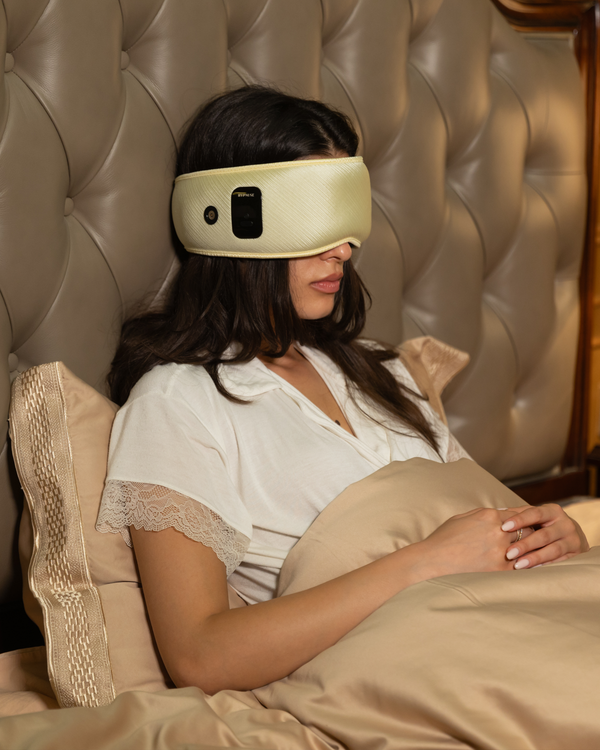
A repeatable evening ritual: dim light, a cool room and a warm cue at lights-out.
Who should be careful with heat before bed?
Warmth is gentle for most people, but it is not right for everyone, and it is worth saying so plainly.
- Hot is not better. Water or heat that feels too hot can irritate skin and may leave you wide awake. Comfortably warm is the goal.
- Sensitive skin or eyes. Stop using any heated product near your eyes if you notice redness, irritation or discomfort.
- Health conditions and pregnancy. If you have a heart condition, circulation problems, are pregnant, or have been told to avoid heat exposure, check with your doctor before adding hot baths or heated products to your routine.
- Persistent sleep trouble. If you regularly lie awake for long periods, snore loudly, wake gasping, or feel exhausted despite enough hours in bed, see a healthcare professional. A warm routine is a helpful habit, not a diagnosis or a treatment.
A heated sleep mask is a sleep-routine product, not a medical device. It is designed to support relaxation and a calmer bedtime, not to treat any condition.
Choosing the right mask if you want warmth at bedtime
If you have decided you want warmth to be part of your routine, the right product depends on how much you want the mask to do.
| Model | What it offers | Price (USD) |
|---|---|---|
| Hypnuse Rhythm | Intelligent heating eye mask for a warmth-led routine | $199 |
| Hypnuse Pro: Immerse Edition | Flagship model with heat, guided breathing, sound and sensors | $249 |
| Hypnuse Hush | Modular 100% blackout mask, no electronics | $35 |
Prices were listed on the Hypnuse site in October 2026 and may change. If your main problem is light, the Hush may be all you need. If warmth is the draw, start with Rhythm. If you want heat plus guided breathing, sound and sensing, the Pro is built for that. You can see how the pieces work together on the How It Works page.
The Hypnuse Pro layout: heat, in-built speakers, an AI-enabled processor and sensors.
Return and warranty terms can differ by product, so check the exact model's product page and the Return Policy before you order. A clear trial window matters, because fit and comfort are personal.
Frequently asked questions
Does heat before bed really help you fall asleep?
Often, yes. Research on warm baths and showers found that bathing 1–2 hours before bedtime was linked to falling asleep about 10 minutes faster on average. The benefit depends heavily on timing, and individual results vary.
How long before bed should I take a warm shower?
Aim for 1–2 hours before you want to be asleep. Taking one right before getting into bed is less effective, because your body is still warm and has not had time to cool down.
Is a heated sleep mask good for falling asleep?
Many people find gentle warmth around the eyes relaxing, and a mask creates a consistent cue for bedtime. It works best as part of a routine, and it is not a substitute for medical advice if you have ongoing sleep problems.
Can heat before bed make it harder to sleep?
Yes, if it is too hot or too close to bedtime. Staying overheated can work against your body's natural evening cool-down, so keep the heat gentle and the bedroom comfortably cool.
What temperature is best for a bath before bed?
The research linked water of roughly 104–109°F (40–42.5°C) with better sleep quality. Choose a temperature that feels comfortably warm to you, and skip anything that feels uncomfortable or scalding.
The bottom line
Heat before bed can genuinely help, but the magic is in the timing and the ritual. Warm up 1–2 hours before bed, let your body cool, keep the room comfortable, and give yourself a repeatable cue at lights-out. For some people that cue is a book and a cup of tea. For others, it is a warm, dark, quiet mask.
If you would like to try the mask route, explore the Hypnuse AI sleep mask wind-down guide, compare the range on the Hypnuse homepage, or look straight at Hypnuse Rhythm.

Hypnuse Pro: Immerse Edition, the flagship model in the range.
This article is for general information and is not medical advice. Hypnuse masks are sleep-routine products, not medical devices. Talk to a healthcare professional about persistent sleep difficulties.


