

You've probably stood in front of a screen full of sleep masks and wondered whether the warm ones are worth the extra money. Some promise a soothing glow of heat around your eyes. Others promise one thing only: total darkness. Both claims sound reasonable, so which one actually fits your nights?
Quick answer: choose a heated sleep mask if you want a calming, repeatable wind-down cue and tend to carry tension into bed. Choose a non-heated mask if light is your main problem, you want something simple, or you travel a lot. Many people end up owning one of each.
This guide compares the two honestly, explains who each suits, and shows where Hypnuse masks fit into the picture.
What Is a Heated Sleep Mask?
A heated sleep mask is an eye mask with a built-in heating element that gives gentle, adjustable warmth around the eyes while it also blocks light.
Think of it as a warm compress you can fall asleep in. The warmth is the signal. Many people find that a little heat around the eyes helps their face and shoulders loosen up, which makes it easier to stop doing and start resting. That's why heated masks are usually pitched at evening routines rather than just bright bedrooms.
Most heated masks are electronic, so they need charging, and that brings extra design questions: how many heat levels are there, how even is the warmth, and how comfortable is the mask once the heat is on? Our own Pro model, for example, offers five adjustable levels from 38°C to 46°C (about 100 to 115°F), with a soft red light on some models. Starting at the lowest setting and working up is the sensible way to use any heated product near your eyes.

What Is a Non-Heated Sleep Mask?
A non-heated sleep mask is an eye mask that focuses on blocking light and staying comfortable, with no heating element and, in many cases, no electronics at all.
Don't mistake simple for basic, though. A well-made blackout mask does one job very well, and that job matters more than people realize. The most common failure of a cheap mask is the light leak at the bridge of the nose and along the cheeks. A good one solves that with a contoured shape, a raised eye cavity so nothing presses on your lashes, and skin-friendly fabric.
Because there's no battery, a non-heated mask is also the easier option for flights, hotels and gym bags. You put it on, and that's it. Nothing to charge, nothing to update, nothing to forget at home.

Heated vs. Non-Heated Sleep Masks: Side-by-Side Comparison
Here's how the two types stack up on the things buyers ask about most. Treat it as a starting point, since individual models vary.
| Factor | Heated sleep mask | Non-heated sleep mask |
|---|---|---|
| Main benefit | Warmth plus darkness for a calming ritual | Darkness and comfort, kept simple |
| Blocks light | Yes, quality depends on the design | Yes, quality depends on the design |
| Needs charging | Yes, in most cases | Usually no |
| Best for | Wind-down routines, tense evenings, nap rituals | Bright rooms, travel, day sleepers, minimalists |
| Portability | Good, but you need the charger | Excellent |
| Extra features | Sometimes sound, breathing guidance and sensors | Rarely, by design |
| Price | Higher | Lower |
Notice what isn't in the table: a winner. Neither type is better in every situation. The better question is what is actually keeping you awake.
When a Heated Sleep Mask Makes Sense
A heated mask earns its price when the problem is your body and mind, not the room. Ask yourself a few honest questions. Do you lie down already wired from the day? Are your shoulders tight and your eyes tired from screens? Do you wish bedtime felt more like a transition and less like a cliff edge?
If you nodded, warmth can help because it works as a cue. Do the same thing at the same point each evening and your body starts to associate it with slowing down. The heat itself is not magic. The repeatable routine around it does a lot of the work.
Heated masks can also suit:
- Stressed professionals whose evenings blur into work. Putting a warm mask on can be a physical "work is over" signal that closing a laptop never quite delivers.
- Short nappers who want a quick reset in the middle of the day.
- Anyone building a wind-down ritual with quiet time, meditation or breathing exercises.
For general guidance on healthy sleep habits, the CDC's sleep resources are a reliable place to start. If sleep trouble is persistent, a conversation with a clinician is the right next step, not a gadget.
When a Non-Heated Sleep Mask Is the Better Pick
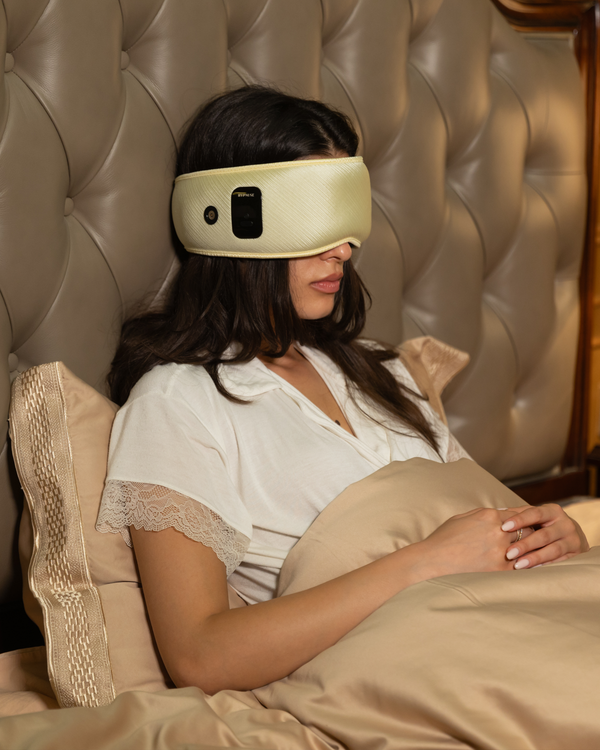
Sometimes the answer really is just darkness. If your bedroom gets street light, your partner reads late, or you sleep during the day after a night shift, a dependable blackout mask solves the actual problem. Adding warmth to a light problem is like buying a heater when the window is open.
A non-heated mask is also the smart choice if you:
- Travel often. No charging, no airline questions about powered or Bluetooth devices, and it packs flat.
- Don't like warmth near your face. Some people simply sleep better cool.
- Want the lowest price and the fewest things to maintain.
- Need a backup. Plenty of heated-mask owners keep a simple one in the suitcase.

Where an AI Sleep Mask Fits In
There's a third option worth knowing about. An AI sleep mask is a wearable eye mask that goes beyond blocking light, using sensors and software to support a wind-down routine through heat, sound, guided breathing and sleep data in a companion app.
In other words, it takes the heated mask idea and adds layers. Models with sensors track things like heart rate and motion and sync with an app, so you can review trends over several nights. Treat any single night's numbers as a rough guide, and remember that consumer tracking is not a clinical sleep study.
If that sounds appealing, our guide to how the Hypnuse AI sleep mask helps you wind down faster walks through each step in detail, including darkness, warmth, breathing and sound. For the technology behind the range, see the How It Works page.
How to Use a Heated Sleep Mask Safely
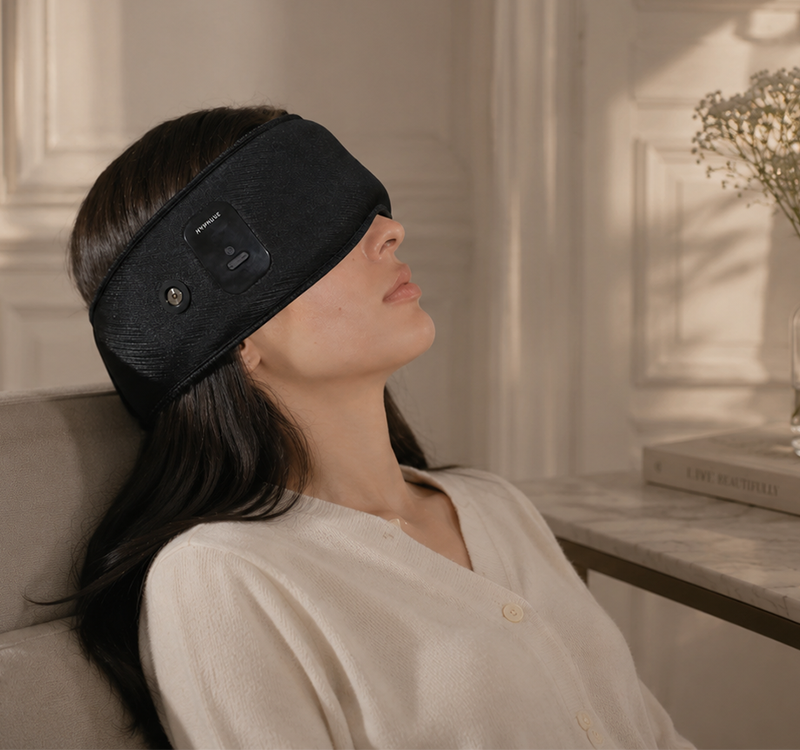
Warmth near your eyes deserves a little care. These habits keep the experience comfortable:
- Start low. Begin at the lowest heat level and raise it only if it feels good.
- Stop if it feels too warm. Discomfort is a signal to turn the heat down or take the mask off.
- Charge it earlier in the day. A routine that depends on a dead battery is a routine that falls apart.
- Use it consistently. Give it a few weeks before judging, because one night tells you very little.
- Check with a professional if you have concerns. If you have an eye condition, sensitive skin or recent eye surgery, ask your eye doctor before using heat near your eyes.
It's also worth being clear about limits. Hypnuse masks are sleep-routine products, not medical devices. They won't diagnose or treat any condition, and results vary from person to person.
Which Hypnuse Mask Matches Your Needs?
Hypnuse covers both sides of this debate. Prices below were listed on the Hypnuse site in October 2026 and may change.
| Model | Type | Price (USD) | Best for |
|---|---|---|---|
| Hypnuse Pro: Immerse Edition | Flagship AI sleep mask with heat, sound and sensors | $249 | The full wind-down experience |
| Hypnuse Rhythm | Intelligent heating eye mask | $199 | Warmth-led evening routines |
| Hypnuse Hush | Non-heated, modular 100% blackout mask | $35 | Darkness first, no electronics |
| Hypnuse Core | Non-electronic, portable travel mask | $15 | Flights, hotels and bags |
A practical way to decide: if you're mainly fighting light, start with Hush. If you want warmth in your routine, look at Rhythm. If you want heat plus sound and heart rate sensing, that's the territory of the Pro. And if you're always on the move, Core is the easy add-on.

A Buyer's Checklist Before You Choose
Whichever type you lean toward, these questions save you from regret:
- Does it block light at the nose and cheeks? Look for a contoured design, not just a flat panel.
- Does anything press on your eyes? A raised eye cavity is more comfortable for many people.
- How is heat controlled? Adjustable levels beat one fixed temperature.
- Which features does your exact model include? Heat, sound and sensors are often limited to certain models.
- What does the app do, and does it cost extra?
- What are the return and warranty terms? Terms can differ by product, so confirm them on the product page before you order.
Frequently Asked Questions
Is a heated or non-heated sleep mask better?
Neither is better in every case. A heated mask suits people who want a warm, calming wind-down cue, while a non-heated mask suits people whose main problem is light, who travel often, or who prefer something simple.
Does a heated sleep mask help you fall asleep faster?
Warmth around the eyes feels relaxing for many people, which can help them settle before bed. Results vary, and a heated mask works best as one part of a consistent evening routine rather than a stand-alone fix.
Is it safe to sleep in a heated eye mask?
Start at the lowest heat level, stop if it feels too warm, and follow the instructions for your specific model. If you have an eye condition, sensitive skin or recent eye surgery, check with your eye doctor first.
Do heated sleep masks block light as well as regular ones?
It depends on the design. Look for a contoured shape and a raised eye cavity that seal out light at the nose and cheeks, whether or not the mask is heated.
Which Hypnuse mask should I choose?
Choose Hypnuse Hush for blackout darkness, Hypnuse Core for lightweight travel, Hypnuse Rhythm for a heat-focused routine, and Hypnuse Pro: Immerse Edition for the fullest feature set including heat, sound and sensors.
The Bottom Line
If your bedroom is the problem, a non-heated blackout mask fixes it cleanly and cheaply. If your evening is the problem, a heated mask gives you a warm, repeatable cue that helps you slow down. And if you want the whole routine in one wearable, an AI sleep mask layers sound, breathing guidance and sensors on top.
Ready to compare? Browse the full Hypnuse eye mask collection, or see how the AI model works in our wind-down guide.
This article is for general information and is not medical advice. Hypnuse masks are sleep-routine products, not medical devices.


