

A sleep headband and a sleep mask solve different problems. A sleep headband is a soft band worn across the forehead, usually to track brain activity or play audio. A sleep mask covers the eyes and blocks light. For most people who simply want to fall asleep faster and stay asleep, a well-fitted mask is the better first purchase. A headband makes sense if you want brainwave-level sleep data.
Picture one person in a hotel room with hallway light under the door, and another who sleeps fine in the dark but wants to know why they wake up tired. Same bedtime, different needs, different winners.
Full disclosure before we go further: we make sleep masks, so we have a stake in this. We have tried to keep it honest and say where a headband genuinely wins.
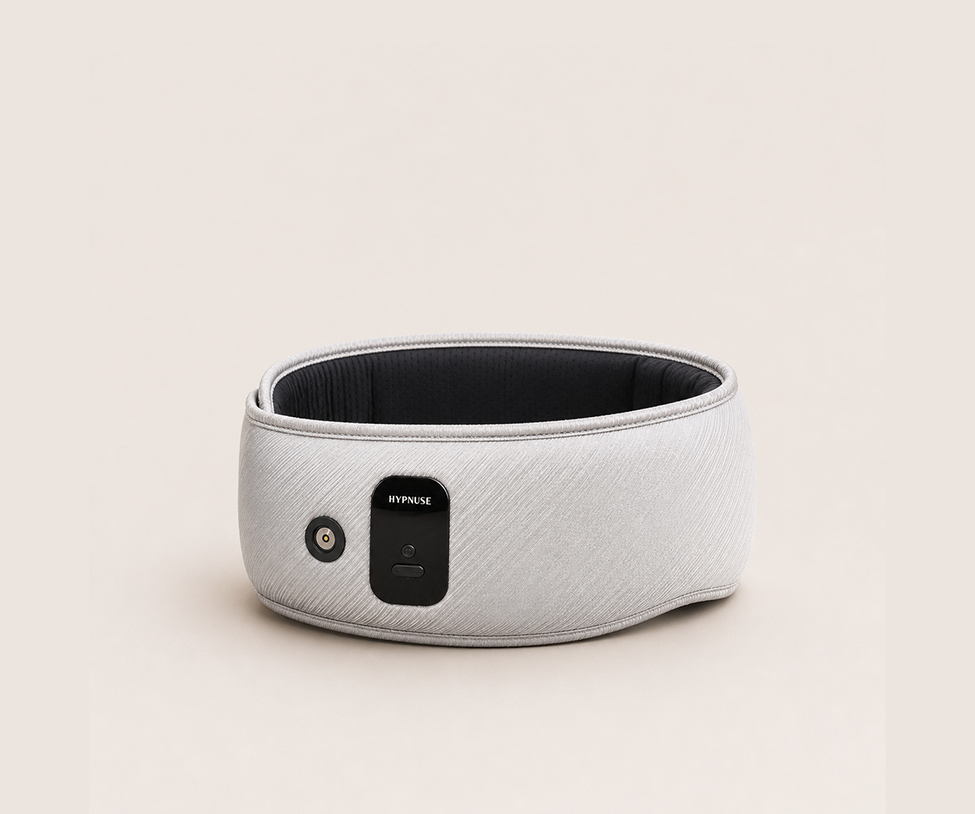
Sleep headband vs sleep mask: the short answer
If your main complaint is that light, noise or a busy mind keeps you awake, start with a mask. It acts on the thing that disturbs your sleep, rather than just measuring it afterwards. If your main goal is understanding your sleep architecture, meaning how much time you spend in light, deep and REM sleep, a headband with EEG sensors reads brain activity more directly than anything worn over the eyes.
There is a middle path too. A modern AI sleep mask blocks light and also tracks pulse, heart rate and movement, so you get a useful picture of your night without wearing a separate device. We will compare what each approach actually measures in a moment.
What is a sleep headband?
The phrase covers two quite different products, and mixing them up is the most common source of confusion for shoppers.
Tracking headbands
These are the ones competitors rank for in “best smart sleep headband” lists. They use EEG sensors on the forehead to read brainwave activity. Muse, for example, markets its S Athena headband with EEG and fNIRS sensors, and says it uses EEG to track deep sleep by measuring delta wave activity. At the time of writing it is listed at $474.99 on Muse’s own store.
Audio headbands
The second type is a soft fabric band with thin flat speakers for people who like audio in bed but cannot sleep with earbuds. That one is not a tracker.
The common thread is that a headband sits across the forehead and leaves your eyes uncovered. That is great for comfort and for sensor contact. It is not designed to stop light, and that matters more than most people realise.
What is a sleep mask?
A sleep mask is a pad worn over the eyes, held on by a strap. The classic version is a flat piece of fabric, and the better modern versions are contoured so the material sits off your eyelids and lashes. That raised cavity is the difference between a mask you tolerate and a mask you forget you are wearing.
A smart sleep mask goes further. The Hypnuse Pro, for instance, combines gentle heat with five temperature settings from 38°C to 46°C, calming light, and 14 built-in soundscapes. Three sensors (pulse, heart rate and six-axis movement) feed a sleep summary in the app. If you are weighing up whether those extras are worth paying for, our honest buyer’s guide to smart sleep masks walks through it.
Not everyone needs electronics. The Hypnuse Hush ($35) is a blackout mask and the Hypnuse Core ($15) is a simple non-electronic option that packs easily for travel. Between them sits the Hypnuse Rhythm ($199), which adds intelligent heating.
Sleep headband vs sleep mask at a glance
| Factor | Sleep headband | Sleep mask |
|---|---|---|
| Blocks light | No, eyes stay uncovered | Yes, especially contoured designs |
| Sleep tracking | EEG models read brain activity directly | Smart models infer from pulse, heart rate and movement |
| Active sleep aids | Audio cues or sounds on some models | Heat, light and soundscapes on smart models |
| Pressure on face | None on eyes; sensors touch the forehead | Low if the eye area is contoured |
| Travel and napping | Fine, but does nothing about bright cabins | Strong, works in light-filled spaces |
| Typical price range | Tracking models run several hundred dollars (Muse S Athena: $474.99) | From $15 (Core) to $249 (Pro) |
| Best for | People who want brainwave-level data | People who want to fall asleep and stay asleep |
Why blocking light matters more than you think
Most of us treat a little light in the bedroom as harmless. Phone charger glow, a gap in the curtains, the streetlamp outside. The research suggests otherwise.
In a 2022 study from Northwestern University published in PNAS, 20 adults spent two nights in a sleep lab. On the second night, some slept in moderate room light (100 lux) while the rest stayed in dim light (under 3 lux). Those in the brighter room had a higher heart rate during sleep and more insulin resistance the following morning. Senior author Dr. Phyllis Zee, chief of sleep medicine at Northwestern, said even modest light can affect heart and metabolic health, and participants were not aware of the changes overnight. Northwestern’s own summary lists blackout shades or eye masks as a practical fix when you cannot control outdoor light.
It was a small lab study, so treat it as a strong signal, not a final verdict. Still, if you cannot make your room properly dark, covering your eyes is the most direct fix. A headband does not do that job. A mask does.
This is especially relevant if you are a light sleeper, a shift worker sleeping through daylight, or a frequent traveller. Our guide to the best sleep mask for light sleepers covers how to check for light leaks around the nose bridge and edges.
Comfort, side sleeping and how each one feels
Comfort is where headbands earn their reputation. A thin fabric band across the forehead has no contact with your eyes, so there is nothing to press, nothing to fog and nothing to disturb lash extensions.
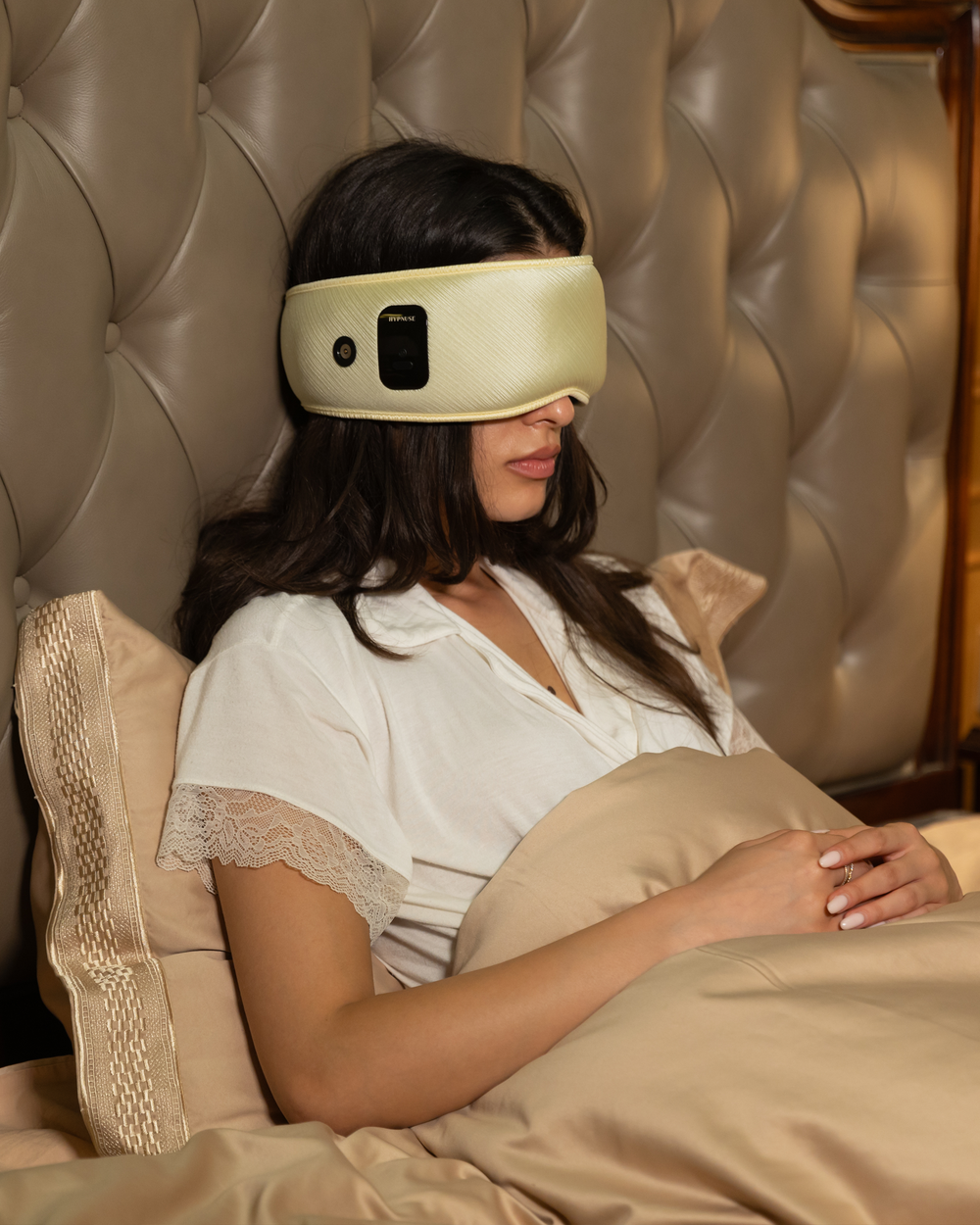
Masks used to lose this argument badly. Old-fashioned flat masks pressed on the eyelids, slipped off in the night and left marks. Contoured designs changed that. Hypnuse describes its masks as having an elevated eye cavity, so you can blink freely, and notes that the patented 3D contour is meant to limit light leaking in around the nose and sides.
Side sleepers should check how thick the mask is where it meets the pillow, and whether the strap sits flat. The Hypnuse Pro weighs 167g. Anyone with extensions should see our guide to the best sleep mask for eyelash extensions.
Tracking: brainwaves vs heart rate and movement
This is the headband’s strongest card, so let us give it a fair hearing. Sleep stages are defined by brain activity. An EEG headband measures that activity directly from the forehead, which is why Muse can talk about delta waves and deep sleep. A mask cannot read brainwaves from the eye area in the same way.
What a smart mask can do is combine pulse, heart rate and movement to estimate how your night went. The Hypnuse Pro’s app turns those three sensors into a sleep score, time asleep, resting heart rate and a stages chart. Our explainer on why heart rate matters for falling asleep explains why it is worth watching as you wind down.
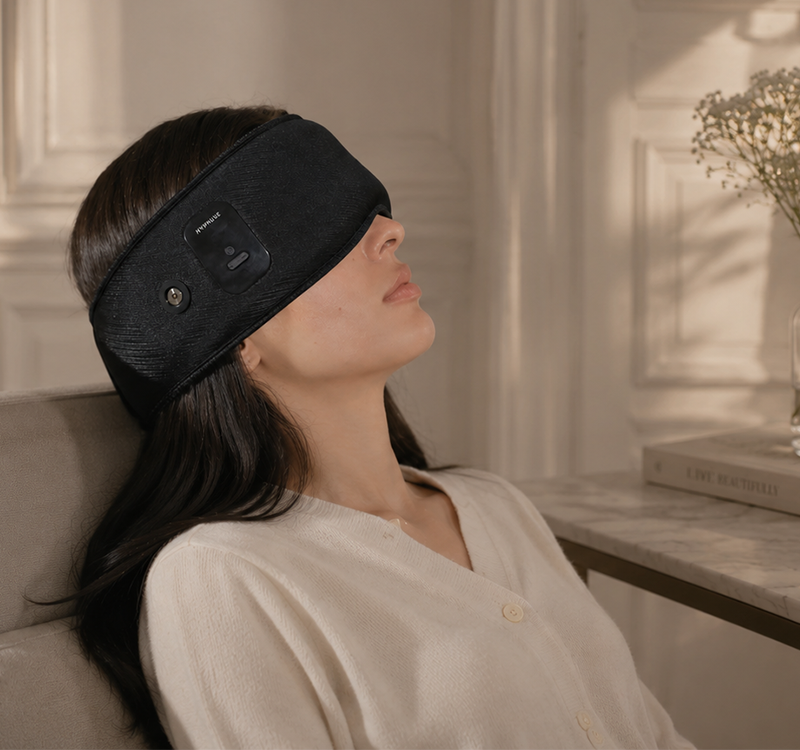
So the honest summary is this. If you want the most direct view of sleep stages, a tracking headband wins. If you want a reasonable overview plus something that actively helps you drift off, a smart mask covers both in one device.
Features that help you fall asleep
Tracking tells you what happened. Sleep aids change what happens.
Some headbands add audio cues or guided sound. Muse describes features such as a Sleep Assist mode and a Smart Wakeup that aims for your lightest sleep moment, with Smart Wakeup included in Muse Premium. A smart mask can layer several aids at once. Warmth around the eyes is a familiar wind-down cue, which is the idea behind the Pro’s five temperature levels. Soundscapes help mask the fridge hum and neighbour’s door, a topic we cover in white noise or soundscapes: what helps you fall asleep.
Waking matters too. A mask can brighten gently instead of jolting you with a buzzer, as explained in what an intelligent wake-up is and how it works.
Price and total cost of ownership
Price is where the two categories separate most. Tracking headbands sit at the premium end: the Muse S Athena lists at $474.99, and some features, such as Smart Wakeup, are part of the paid Muse Premium plan. That is a serious outlay for a gadget that only pays off if you wear it consistently.
Masks cover a far wider range, from $15 for the Core to $249 for the Pro.
Think in terms of cost per night. A device you wear 300 nights a year gives far better value than a clever one that lives in a drawer after a month. Before you buy anything, check the return policy so a poor fit does not become a sunk cost.
Who should choose a sleep headband
A headband is the right call if you are a data-driven sleeper who wants brain-level insight, you already sleep in a dark room, and you are comfortable with a premium price and possibly a subscription. It also suits people who dislike anything near their eyes.
Who should choose a sleep mask
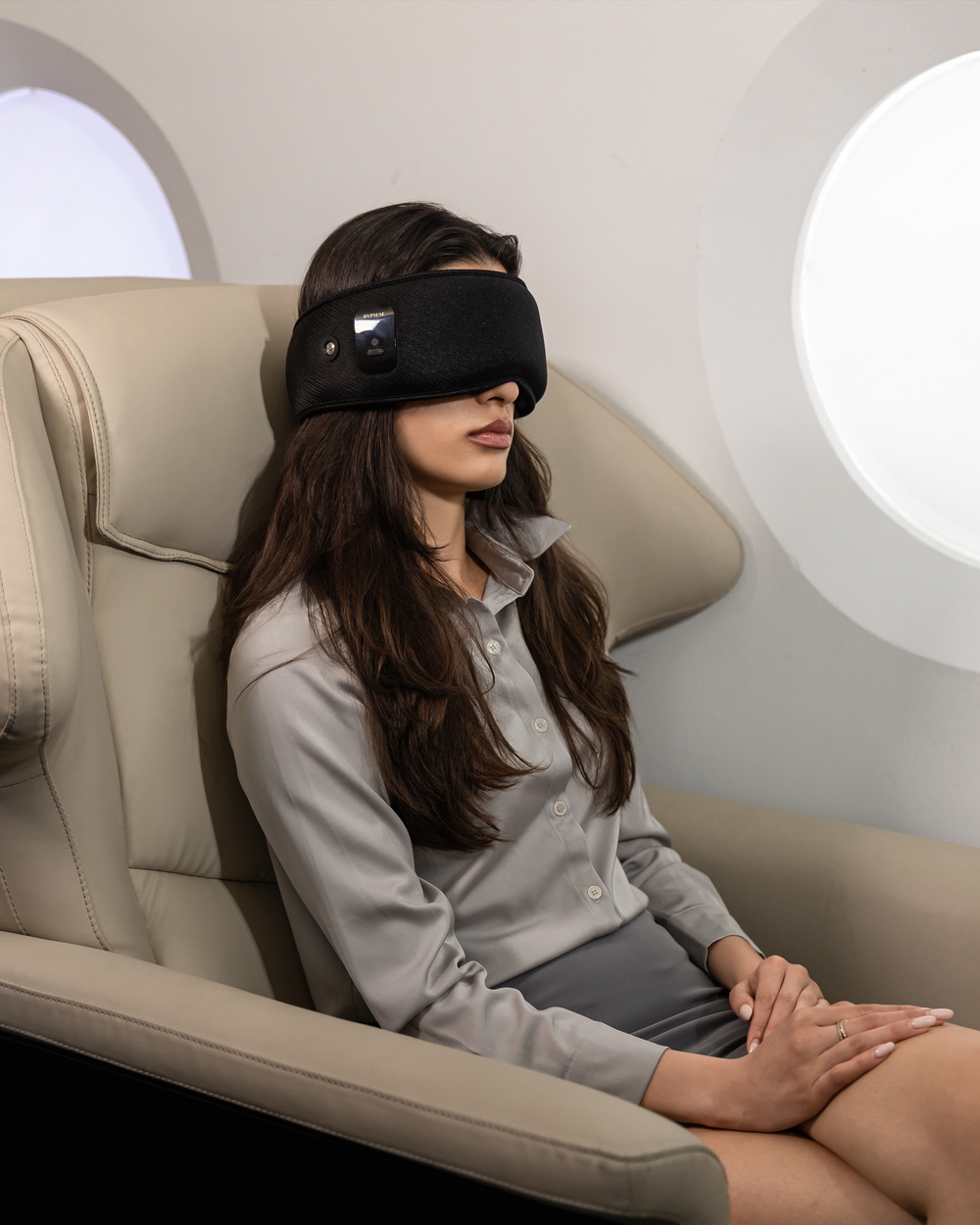
A mask is the better pick if your room is not fully dark, you travel often, you nap in bright places or you work nights. It is also the sensible choice if you want one device that blocks light, plays calming sound and warms the eye area. Frequent flyers may like our practical guide to sleeping on a long-haul flight with a smart sleep mask.
Not sure which Hypnuse model fits? How it works explains the technology, and our sleep tips page has habits that help whichever product you choose.
Frequently asked questions
Is a sleep headband better than a sleep mask?
Neither is better in every case. A headband suits people who want brainwave-based sleep data. A mask suits people who want to block light and actively help themselves fall asleep. For most buyers a mask is the more practical first purchase.
Can I wear a sleep headband and a sleep mask together?
Sometimes, but it may not be worth it. A mask strap or pad can shift a headband’s sensors, which can affect readings. Most people pick one based on whether they want light-blocking or brainwave tracking.
Do sleep masks track sleep as accurately as headbands?
Not in the same way. EEG headbands measure brain activity directly. Smart masks such as the Hypnuse Pro estimate sleep from pulse, heart rate and movement. Both are consumer tools for spotting trends, not diagnostic equipment.
Which is better for side sleepers?
Both can work. A thin headband has nothing near the eyes, while a contoured mask with a raised eye cavity avoids pressing on eyelids. Check how thick the side of the mask is against your pillow, and choose a flat, soft strap.
Are sleep masks and headbands safe for everyone?
Most healthy adults can use them without trouble. If you have an eye condition, have had eye surgery, or struggle with chronic insomnia or suspected sleep apnea, check with your doctor or eye specialist first.
Ready to try a mask that does more than block light?
Explore the Hypnuse Pro AI sleep mask or browse the full Hypnuse eye mask collection.
Our verdict
If darkness is what you are missing, buy a mask. If insight is what you are missing, consider a headband. If you want a bit of both without spending close to $500, an AI sleep mask gets you a long way there. Whichever you choose, give it a few weeks before judging it.


